 Hardiness with Dr Paul Taylor
Preventive cardiology, exercise, nutrition, stress, and longevity with Dr. Ross Walker
This podcast explores practical ways to protect your heart and support healthy aging. Dr. Paul Taylor talks with preventive cardiologist Dr. Ross Walker about the everyday habits that shape cardiovascular health, how to make sense of cholesterol and other risk markers, and where tests, medication, and supplements can help. Together, they cut through common health claims and discuss exercise, stress, diet, and emerging approaches to preventing heart disease.
The conversation focuses on practical prevention rather than late-stage treatment, with an emphasis on how much heart disease risk can be reduced before medication is considered. Ross explains what he thinks about cholesterol, coronary calcium scoring, statins, LP(a), MTHFR, and the future of cardiovascular medicine. It’s a wide-ranging, practical discussion for anyone interested in health span, not just lifespan.
Key topics
- Dr. Ross Walker shares his background as a cardiologist of 47 years who shifted into prevention about 30 years ago after seeing repeated cardiac surgeries without lifestyle change.
- The pair discuss his 80/10/10 model: 80 percent lifestyle, 10 percent orthodox medicine, and 10 percent evidence-based supplements.
- Dr. Ross Walker outlines his five keys to health:
- No addictions
- Good-quality sleep
- Simple nutrition
- Regular exercise
- Happiness and relationships
-
Five categories of stress
- Emotional stress
- Mental stress
- Physical stress
- Pharmacologic stress
- Infective stress
Metabolic syndrome markers
- High triglycerides
- Low HDL
- High blood pressure
- Belly fat
- Insulin resistance or diabetes tendency
- Exercise is presented as one of the strongest interventions for heart disease, dementia, diabetes, depression, osteoporosis, and healthy aging.
Timestamps
(00:59) From 47 years in medicine to a prevention-first career
(02:31) The moment he realized surgery without prevention was not enough
(03:54) Why his 80/10/10 approach puts lifestyle first
(04:23) The five keys to health: sleep, food, exercise, happiness, and no addictions
(06:22) Why relationships and social connection matter for longevity
(07:46) Why exercise may be the most important topic in the whole discussion
(09:10) Sarcopenia, frailty, grip strength, and resistance training in older adults
(10:37) Exercise as an antidepressant and the brain benefits of training
(11:15) The Dallas bed rest study and how fast the body deconditions
(12:42) Why aging is a disease process and exercise must be adjusted over time
(14:29) How much exercise is too much and the risk of overdoing it
(16:12) Vasodilation, dementia, and why exercise helps the brain
(17:38) Viagra, Cialis, and the vasodilation conversation
(18:35) Why extreme athletes can develop more coronary calcification
(19:05) Genes load the gun, environment pulls the trigger
(20:32) Why genetics can be overridden by phenotype and lifestyle
(21:55) The brain’s “challenge muscle” and why hard things matter
(23:55) Stress appraisal, challenge versus threat, and cardiovascular effects
(25:07) The five categories of stress and how each affects the heart
(27:00) Drugs, marijuana, cocaine, caffeine, and cardiovascular risk
(30:11) Alcohol, coffee, and why context matters more than single ingredients
(32:00) Infective stress, COVID, and cardiovascular complications
(33:26) Chronic inflammation and the plaque formation process
(35:21) LDL particle size, ApoB, LP(a), and better risk markers
(36:19) Why coronary calcium scoring is central to Dr. Walker’s approach
(39:43) Statin side effects, real-world experience, and individual decision-making
(41:39) A case study: lifelong high cholesterol, zero calcium score, and no statin
(42:09) Statins versus PCSK9 inhibitors and when each makes sense
(44:29) What statins do and don’t reduce, and the unfinished LP(a) story
(46:09) Why calcium score should guide statin decisions more than cholesterol alone
(47:45) Why CT coronary angiograms and plaque analysis may change risk assessment
(49:14) Radiation risk, age, and the value of imaging after 50
(50:13) Nutrition basics: eat less, eat more natural food
(51:48) Processed food and reading labels
(52:18) Saturated fat, the PURE study, and why fear of fat is overblown
(54:17) Ancel Keys, sugar, and the history of bad nutrition advice
(55:48) Triglyceride-to-HDL ratio, insulin resistance, and metabolic syndrome
(56:56) Genetic insulin resistance and why some populations are more vulnerable
(58:09) What the MTHFR gene does and why folic acid can be a problem
(60:39) Activated folate, folinic acid, and personalized supplementation
(63:27) Why supplements need to be individualized and evidence-based
(64:01) The future: gene therapy, vaccinations against heart disease, and transcatheter valves
(65:23) Blue zones, movement, community, and the real drivers of longevity
(66:26) Stem cells, cardiac regeneration, and what may still be years away
(68:12) Why the five keys still matter more than any future technology
“The best treatment of heart disease, cancer, Alzheimer’s, osteoporosis, diabetes is not to get them in the first place.”
Resources
Website - https://www.drrosswalker.com/
LinkedIn - https://www.linkedin.com/in/dr-ross-walker/?isSelfProfile=false
Facebook - https://www.facebook.com/DrRossWalkerCardiologist
Website - https://wlife.co/
Support the Podcast
If you found this conversation valuable, consider subscribing and leaving a review on your preferred podcast platform. Your feedback helps us continue to bring you insightful discussions on important health topics.
In 1 playlist(s)
Hardiness with Dr Paul Taylor
Host Dr Paul Taylor, a Psychophysiologist, Neuroscientist, Exercise Scientist, and Nutritionist inte…Social links
Follow podcast
Recent clips
Here's how to make your carbs healthier - Wisdom Wednesdays
13:28

Calm Your Nervous System With This Short Breathing Technique With Carly Taylor
05:28
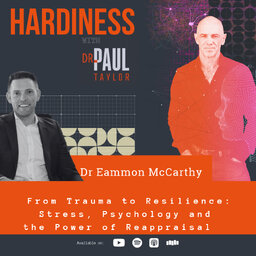
From Trauma to Resilience: The Stress Continuum and the Power of Reappraisal, with Dr Eamonn McCarthy
1:03:51