 Hardiness with Dr Paul Taylor
This is a repeat episode from a couple of years ago, because it was absolutely brilliant.
In this conversation, Dr Stuart Shanker discusses his journey in understanding self-regulation and stress through the lens of neuroscience. He explains the intersection of neuroscience and human behaviour, exploring concepts like the interbrain, homeostasis, and the impact of stress on emotional regulation and development.
Key Takeaways:
- Stress and Human Behaviour: Understanding how stress affects human behaviour and the importance of self-regulation in managing stress effectively.
- Neuroscience Insights: Insights into the limbic system and midbrain, and their roles in emotional regulation and stress response.
- Global Knowledge Dissemination: The importance of spreading knowledge about stress and self-regulation both in Canada and globally.
- Homeostasis and Stress: The concept of homeostasis and how excessive stress can lead to imbalance in the body's systems.
- Practical Applications: Practical strategies for self-regulation that can improve mental and physical well-being.
Resources
Website: https://self-reg.ca/
Stuart is the author of the Self-Reg trilogy: Calm, Alert and Learning: Classroom Strategies for Self-Regulation (Pearson 2012), Self-Reg: How to Help Your Child (and You) Break the Stress Cycle and Successfully Engage with Life (Penguin 2016); Reframed: Self-Reg for a Just Society (UofT Press 2020), and with Susan Hopkins, Self-Reg Schools: A Handbook for Educators (Pearson 2019).
LinkedIn: https://www.linkedin.com/in/stuartshanker/
Facebook: https://www.facebook.com/StuartShankerSelfReg/
Support the Podcast
If you found this conversation valuable, consider subscribing and leaving a review on your preferred podcast platform. Your feedback helps us continue to bring you insightful discussions on important health topics.
03:41 Stuart Shanker's Journey and the Merit Centre
09:23 The Evolution of Neuroscience and Human Behaviour
17:33 Understanding the Interbrain and Its Role
25:25 Homeostasis and Its Impact on Behaviour
27:54 Understanding Homeostatic Imbalance
33:15 Self-Regulation vs. Self-Control
35:18 Recognising Stress in Children
38:27 The Importance of Calmness
42:27 Allostatic Overload and Its Implications
48: 54 Adaptive vs. Maladaptive Self-Regulation
57:52 The Role of Exercise in Self-Regulation
In 1 playlist(s)
Hardiness with Dr Paul Taylor
Host Dr Paul Taylor, a Psychophysiologist, Neuroscientist, Exercise Scientist, and Nutritionist inte…Social links
Follow podcast
Recent clips
The Best Stressed-Out Mum I Can Be With Carly Taylor
06:10
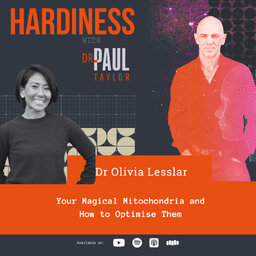
Your Magical Mitochondria - and How to Optimise Them, with Dr Olivia Lesslar
58:50
The Alcohol & Health Story Isn’t as Simple as You Think: Wisdom Wednesdays
22:01