 The Heart and Hustle of Portugal
In this conversation, Capitão Fausto revisits its beginnings: long nights spent in an old Citroën, listening to records by the river and the moment when writing in Portuguese felt not like a strategy but an instinct. They describe the internal democracy that shapes every decision — imperfect, noisy, but essential — and the way they learned to argue, compromise, and mature as a unit. Songwriting remains rooted in atmosphere rather than text: instrumentals come first, creating a landscape into which lyrics eventually fall, often late in the process and almost always colored by a sense of nostalgia.
The MEO Arena stands as the symbolic peak of this slow and steady ascent: a bet that initially triggered doubt — “at first almost all of us said, ‘It’s too big, I don’t know if we have the size for it,’” Salvador recalls, before becoming a collective challenge turned triumph. Even the sight of the outgoing President Marcelo Rebelo de Sousa in the front row felt less like validation and more like proof that their music still carries the spark that has guided them from the start: friendship as structure, persistence as method, and a commitment to protecting the shine that keeps them moving.
In 1 playlist(s)
The Heart and Hustle of Portugal
Each week, join Tony Gonçalves—a U.S.-based Portuguese immigrant and successful media executive—as h…Social links
Follow podcast
Recent clips

A neuroscientist turned into a fado star: meet Mariana Arroja
20:47
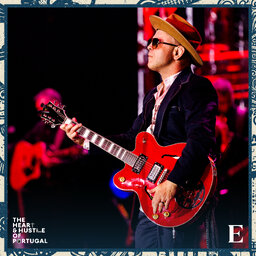
Nelson Sobral: A black belt with a guitar, Portuguese at heart
18:21
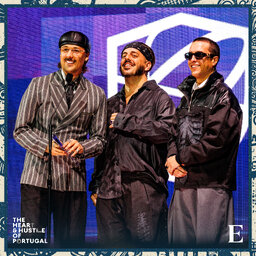
D.A.M.A. uses their music to protect Portuguese culture
19:07