 The Heart and Hustle of Portugal
Born in Lisbon’s Graça neighbourhood, Ângelo Freire grew up in fado houses, absorbing the language of the genre long before he began to articulate his own. He sang from the age of seven, picked up the Portuguese guitar shortly after, and by eleven was already performing on national television. Playing alongside figures such as Carlos do Carmo, Mariza, Ana Moura or Carminho required restraint as much as skill, while learning how to listen, react and support.
Only recently has Freire stepped forward with a self‑titled album, motivated less by self‑assertion than by concern for the future of the language of fado. With a repertoire still heavily dependent on centuries‑old melodic structures, he argues that fado risks repetition if new music is not written within its grammar. His compositions aim to extend the tradition without altering its matrix, offering new melodies that can be inhabited, reused and transformed by others. But it is on his guitar, that is always by his side, that Ângelo Freire’s voice (and soul) truly shines, as he demonstrates playing live for this podcast.
In 1 playlist(s)
The Heart and Hustle of Portugal
Each week, join Tony Gonçalves—a U.S.-based Portuguese immigrant and successful media executive—as h…Social links
Follow podcast
Recent clips

A neuroscientist turned into a fado star: meet Mariana Arroja
20:47
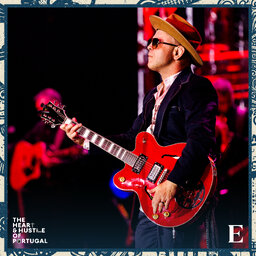
Nelson Sobral: A black belt with a guitar, Portuguese at heart
18:21
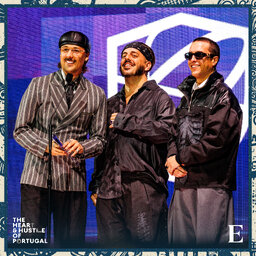
D.A.M.A. uses their music to protect Portuguese culture
19:07