 Newt's World

Episode 1051: The End of a Fair Price — Lindsay Owens on How Companies Use Your Data to Charge You More
For 150 years, the price tag was a promise: one price, the same for everyone. That promise is gone. Today, algorithms help landlords set your rent, software tracks your clicks to figure out the most you will pay, and two shoppers can buy the same carton of eggs in the same store on the same day for…
40:28
Episode 1050: The Midterms, 27 Days Out — McLaughlin and Sosnik on Who Will Control Congress
With 27 days until the 2026 midterms, mail-in voting is already underway and the polls are moving. Since September, the generic ballot has shifted toward Democrats, and prediction markets now give them roughly a 90% chance of winning the House. But is the race as settled as it looks? Newt brings to…
41:35
Episode 1049: The Exhausted Majority — Who Independents Really Are and Why They'll Decide 2026
Nearly half of American voters now call themselves independents, but Adam Brandon argues they are far more than a mushy middle ground between the two parties. In his new book, The Exhausted Majority: Building a Home for the Politically Homeless, Brandon profiles a coherent, center-right bloc of Ame…
35:24
Episode 1048: Drones, AI, and the Future of War — How Artificial Intelligence Is Remaking the Battlefield
Ukraine has become the most innovative military power in the world, building drones by the millions, fielding ground robots, and wiring the battlefield together with software. Russia is racing to match it. Iran has used $35,000 drones to force the United States to fire interceptors costing millions…
35:41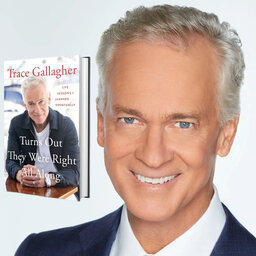
Episode 1047: Trace Gallagher — Life Lessons, Lucky Breaks, and Three Decades at Fox News
Before Trace Gallagher became one of Fox News's most recognizable faces, he was a professional water skier at Six Flags Marine World, where he once taught Jimmy Buffett to ski. A knee injury ended that career and sent him on an unexpected path through announcing, local television, and eventually Fo…
41:59
Episode 1046: Inside DOGE — The Waste Was Real and the Resistance Was Fierce
In January 2025, Tyler Hassen was running a diversified energy business in Houston. Weeks later, he was inside the West Wing as a DOGE senior insider, named Acting Assistant Secretary of Policy, Management, and Budget at the Department of the Interior with authority over $35 billion in spending and…
41:41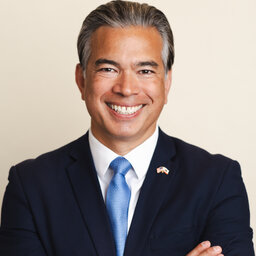
Episode 1045 The $17 Billion Meta Settlement — and What It Means for Your Kids
Last month, a bipartisan coalition of 51 attorneys general announced what may be the largest consumer protection settlement in American history: a $17 billion dollar agreement with Meta, the parent company of Facebook and Instagram. California Attorney General Rob Bonta led the fight, accusing Meta…
29:34
Episode 1044 Charlie Kirk — Faith, Free Speech, and a Legacy That Lives On
One year after Charlie Kirk was assassinated at Utah Valley University, his friend and longtime confidant Christy Edwards Lawton joins Newt to discuss her new memorial photo book, Charlie Kirk: In His Own Words. Built entirely from Charlie's own posts on X, never-before-seen photographs, and tribut…
40:16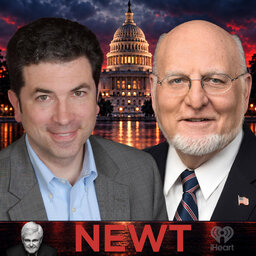
Episode 1043: Alzheimer's Disease Breakthrough New Blood Tests, New Treatments, and What Congress Must Do Now
More than seven million Americans live with Alzheimer's disease today, a number projected to nearly double by 2060. It already consumes 20% of all Medicare spending and costs the economy close to half a trillion dollars annually. But the science is finally catching up. Newt is joined by former CDC …
36:31
Episode 1042: Burn It Down — What the Polls Say Young Americans Really Want
Most political analysts say Generation Z is quietly turning conservative. Rich Baris says the data tells a completely different story. The director of Big Data Poll and the most accurate national pollster of both 2016 and 2024 joins Newt to discuss his new book, Burn It Down: What the Polls Say You…
41:09