 This Medical Life
In 1880, a French physician described a patient having up to 200 sleep attacks a day, some triggered by nothing more than a good hand of cards or the sight of his own wine barrels. That case, and an earlier 1877 description from German psychiatrist Carl Westphal, gave the condition its name and its first clinical picture. Dr Travis Brown reads from both original case reports before turning to two guests for where narcolepsy stands today.
Di Spillaine, an Australian narcolepsy advocate and lived experience educator, describes going almost 40 years undiagnosed, mistaking her symptoms (childhood hallucinations, cataplexy triggered by laughter, sleep paralysis) for ordinary tiredness until a multiple sleep latency test finally confirmed narcolepsy. Professor Robert Adams, a respiratory and sleep physician at Flinders Medical Centre and medical director of the Adelaide Institute for Sleep Health, explains the underlying orexin deficiency behind narcolepsy type 1, how it differs from everyday tiredness and other sleep disorders, and the diagnostic pathway, including the Epworth Sleepiness Scale and multiple sleep latency testing.
What to listen for: the questions Professor Adams suggests a GP ask beyond “are you tired”, and why narcolepsy sits, in his words, at the end of the queue of likely causes but should still be considered in young patients with long-standing, profound sleepiness.
This is the story of narcolepsy.
Useful Link:
Epworth sleepiness scale: https://www.cdc.gov/niosh/work-hour-training-for-nurses/02/epworth.pdf
Our Special Guests:
Di Spillaine is an Australian narcolepsy advocate, lived experience educator and creator of the podcast Waking Up Tired: Narcolepsy Symptoms Explained
Professor Robert Adams is a respiratory and sleep physician at Flinders Medical Centre and medical director of the Adelaide Institute for Sleep Health at Flinders University
Listen:
This Medical Life podcast is available on all podcasting services, Apple Podcasts, YouTube, and Spotify. Members of the RACGP are able to log the hours as CPD (Education) that they listen to the episodes under self record via Quick log. We invite you to help support us on our donation page.
In 2 playlist(s)
This Medical Life
Welcome to the This Medical Life podcast. Our mission is to share stories about the triumphs and tra…Social links
Follow podcast
Recent clips
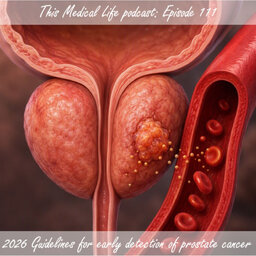
Episode 111: 2026 Early Prostate Cancer Detection | PSA And mpMRI
52:54

Episode 109: Sexual Harassment In Medicine | Dr Louise Stone
1:06:13
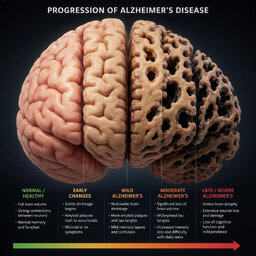
Episode 108: Alzheimer’s Disease | Auguste Deter’s Decline
1:06:54