 This Medical Life
This Medical Life
Welcome to the This Medical Life podcast. Our mission is to share stories about the triumphs and tragedies of diseases and illnesses from ancient times up until what we know today. It is about those scientific and medical minds who came before us and how, every single day, we stand on the shoulders of giants. This is a podcast about the stories of medicine. Hosted by Dr. Travis Brown and Stev…Social links:
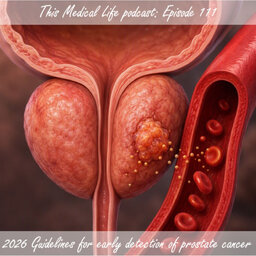
Episode 111: 2026 Early Prostate Cancer Detection | PSA And mpMRI
New guidelines are here. The Prostate Cancer Foundation of Australia and the Australian Government Department of Health, Disability and Ageing have released the 2026 Guidelines for the Early Detection of Prostate Cancer. One in seven Australian men will be diagnosed with prostate cancer. The aim is…
52:54
Episode 110: Narcolepsy | Fighting The Sleep Demon
In 1880, a French physician described a patient having up to 200 sleep attacks a day, some triggered by nothing more than a good hand of cards or the sight of his own wine barrels. That case, and an earlier 1877 description from German psychiatrist Carl Westphal, gave the condition its name and its…
1:07:07
Episode 109: Sexual Harassment In Medicine | Dr Louise Stone
Sexual harassment in medicine is almost universally perpetrated by men, and in over half of doctor-on-doctor cases, it happens in the workplace itself, not at a conference or a staff event. That is one of the findings from a decade of research by Dr Louise Stone, who began this work in 2014 after a…
1:06:13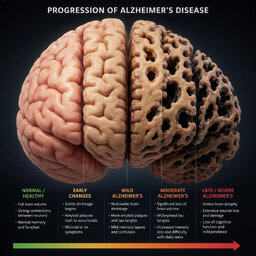
Episode 108: Alzheimer’s Disease | Auguste Deter’s Decline
One doctor’s case from 1901 changed how we understand memory loss. Auguste Deter was 51 when her husband Carl brought her to see Dr Alois Alzheimer in Frankfurt, worried by memory lapses that had turned into paranoia and confusion. When Auguste died five years later, Alzheimer examined her brain an…
1:06:54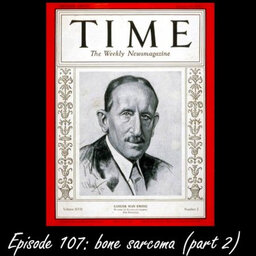
Episode 107: Bone Sarcomas Part 2 | Ewing And Coley’s Legacy
Two teenage patients, thirty years apart, changed how bone sarcomas are treated. In 1890, seventeen-year-old Bessie Dashiell saw New York surgeon William Coley with a painful hand. Despite an amputation, she died of metastatic cancer ten weeks later. Coley’s search for a better answer led him to Co…
50:16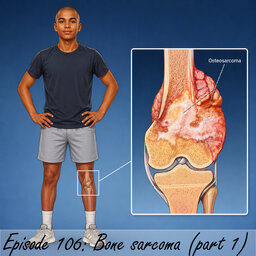
Episode 106: Bone Sarcoma Part 1 | Osteosarcoma, Chondrosaroma & Ewing Sarcoma
Bone sarcomas are rare, accounting for 0.2% of all cancer diagnoses, with around 200 cases diagnosed in Australia each year. The three main types differ by age and site: osteosarcoma (around 30 to 35% of cases, often in the arms, legs and pelvis, with peaks in adolescence and again in the seventies…
57:20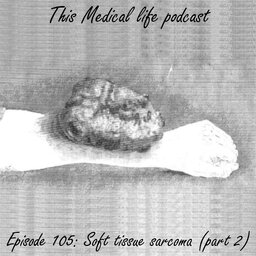
Episode 105: Soft Tissue Sarcoma Part 2 | Adjuvant Therapies
The treatment of soft tissue sarcomas is a highly specialised area. The first effective chemotherapy agent against sarcomas was only identified in the 1960s and benefits of adjuvant radiotherapy treatment began in the 1970s. We continue to learn as new agents become available and tailor treatments …
1:00:58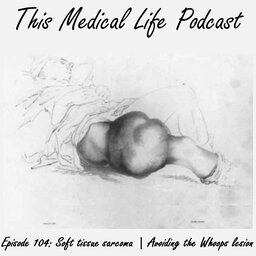
Episode 104: Soft Tissue Sarcoma Part 1 | Avoiding The Whoops Lesion
Soft tissue sarcomas are tumours that arise from connective tissue, fat, muscle, and blood vessels. They are distinct from epithelial malignancies (carcinomas) in both morphology and behaviour. Unfortunately, due to their rare occurrence, these tumours can be mistaken clinically and pathologically …
1:21:35
Episode 103: Clinical ethics | Eternal conundrums
Ethics, codes of conduct, and challenging decisions are universal constants in medicine. Difficult situations and trying to do the right thing are not always obvious particularly when these decisions involve lots of emotions, family members, and have life and death implications. Ethics, and ethics …
45:11
Episode 102: Lipoprotein (a) | Genetic Cholesterol
Lipoprotein (a) (Lp(a)) was discovered in 1963 by a Norwegian geneticist by the name of Kåre Berg who studied particles that carried cholesterol in the blood. He found some patients had an additional protein on the low-density lipoprotein. Studies found that patients with elevated Lp(a) had increas…
38:23