 This Medical Life
This Medical Life
Welcome to the This Medical Life podcast. Our mission is to share stories about the triumphs and tragedies of diseases and illnesses from ancient time…One doctor’s case from 1901 changed how we understand memory loss. Auguste Deter was 51 when her husband Carl brought her to see Dr Alois Alzheimer in Frankfurt, worried by memory lapses that had turned into paranoia and confusion. When Auguste died five years later, Alzheimer examined her brain and found two things under the microscope: amyloid plaques between nerve cells and neurofibrillary tangles within them. His 1906 presentation to a room of psychiatrists drew no questions at all. It was not until 1910, when Emil Kraepelin included the case in his Handbook of Psychiatry, that the term Alzheimer’s disease appeared in print for the first time.
Dr Liam Mulcahy, physician trainee and author of Beyond the White Coat, traces that discovery in detail, then Dr Travis Brown turns to two guests for where the disease stands in 2026.
Dr Daniel Clarke, consultant neurologist at Sir Charles Gairdner Hospital and director of clinical trials at Alzheimer’s Research Australia, covers how Alzheimer’s actually presents (often nothing like the stereotype), why history remains the most important diagnostic tool, and why non-pharmacological measures such as exercise and vascular risk control come before medication. He also explains why family history is often overrated, and why he does not recommend routine APOE4 gene testing.
Dr Gemma Daley, consultant chemical pathologist at Sullivan Nicolaides Pathology, explains what the new p-tau181 and p-tau217 blood tests can and cannot tell a GP, who should and should not be referred for them, and why they are adjunctive tests rather than standalone diagnostic tools.
What to listen for: the presenting features that separate Alzheimer’s from ordinary age-related forgetfulness, and what a negative or positive p-tau result actually means for a patient in front of you.
This is the story of Alzheimer’s disease.
Useful links:
Dementia Australia: https://www.dementia.org.au/
Alzheimer’s Research Australia: https://alzheimersresearch.org.au/
Our Special Guests:
Dr Liam Mulcahy is a physician trainee with an interest in neurology and author of Beyond the White Coat
Dr Daniel Clarke is a consultant neurologist and director of clinical trials at Alzheimer’s Research Australia
Dr Gemma Daley is a consultant chemical pathologist at Sullivan Nicolaides Pathology
Listen:
This Medical Life podcast is available on all podcasting services, Apple Podcasts, YouTube, and Spotify. Members of the RACGP are able to log the hours as CPD (Education) that they listen to the episodes under self record via Quick log. We invite you to help support us on our donation page.
In 2 playlist(s)
This Medical Life
Welcome to the This Medical Life podcast. Our mission is to share stories about the triumphs and tra…Social links
Follow podcast
Recent clips
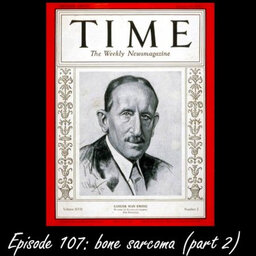
Episode 107: Bone Sarcomas Part 2 | Ewing And Coley’s Legacy
50:16
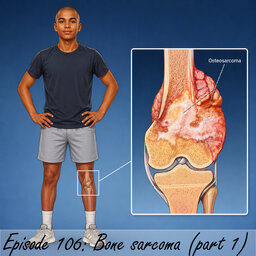
Episode 106: Bone Sarcoma Part 1 | Osteosarcoma, Chondrosaroma & Ewing Sarcoma
57:20
Episode 105: Soft Tissue Sarcoma Part 2 | Adjuvant Therapies
1:00:58