 CountryWide CONNECT
-
Climate report flags urgent risks for rural New Zealand
-
Leading premium olive oil producer closes after 27 years
-
Government running out of time on Freshwater Reform
Rural News is in partnership with Farmlands as part of CountryWide CONNECT with Andy Thompson & Sarah Perriam-Lampp - our daily rural show livestreamed from 11am-1pm. Visit country-wide.co.nz on how to watch / listen.
Climate report flags urgent risks for rural New Zealand
A major new climate risk assessment has flagged rural communities among those facing the sharpest consequences from climate change — with roads, infrastructure, farming and council finances all under growing pressure.
The Climate Change Commission's 2026 National Climate Change Risk Assessment identifies ten priority risks for New Zealand. While agriculture sits outside that top ten — rated as a "one to watch" — the report warns farming risk jumps directly from minor now to major by 2050, driven by drought, extreme weather, soil erosion and pest pressure.
The report specifically calls out smaller rural councils as among the hardest hit, with constrained budgets and limited borrowing capacity already delaying resilience investment.
A quarter of roads and a third of rail lines are exposed to flooding — with consequences described as especially severe for rural and isolated areas where alternative routes simply don't exist.
Commission chief executive Jo Hendy says New Zealand is stuck in react and recover mode, spending money cleaning up after events rather than building resilience.
Leading premium olive oil producer closes after 27 years
New Zealand's leading premium olive oil producer has gone into liquidation, raising serious questions about the future of the local industry.
Wairarapa-based The Olive Press — the country's only registered wholesaler of certified premium olive oils — will be wound up after twenty-seven years in operation. Director Rod Lingard says the closure leaves local growers with few options for their commercial crops, facing a choice between selling fruit to processors outside the region or leaving olives on the tree.
Lingard says a lack of investor interest forced the closure, and he's been critical of the industry's governing body, Olives New Zealand, saying it has failed to develop a growth strategy or marketing plan in three decades.
Government running out of time on Freshwater Reform
With six months until the election, Federated Farmers is warning the Government is rapidly running out of time to deliver on its freshwater and resource management promises to farmers.
Freshwater spokesperson Colin Hurst says while some early progress was made repealing unworkable rules, the previous Government's National Policy Statement for Freshwater Management — introduced by former Environment Minister David Parker in 2020 — remains law nearly three years on. That means resource consents are still being tested against targets Federated Farmers says are unachievable, and any change in Government could see those rules immediately reimplemented.
Crucially, the national policy detail that would replace existing frameworks hasn't been released, leaving farmers unable to make long-term investment decisions.
There's cautious optimism about new Environment Minister Nicola Grigg, who has a farming background. But Hurst says optimism only goes so far.
In 1 playlist(s)

CountryWide CONNECT
CountryWide CONNECT is the latest innovative daily livestreamed rural video/radio show broadcast at …Social links
Follow podcast
Recent clips
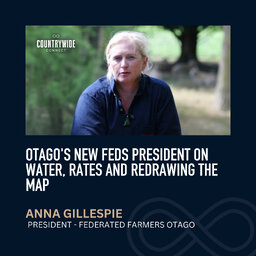
Otago's new Feds President on water, rates and redrawing the map // Anna Gillespie, President, Federated Farmers Otago
13:39
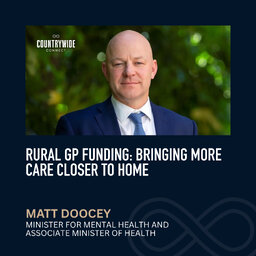
Rural GP funding: Bringing more care closer to home // Matt Doocey, Minister for Mental Health and Associate Minister of Health
13:30

Finalists gather for NZ Dairy Industry Awards // Maegan Legg, Chair, NZ Dairy Industry Awards
09:36