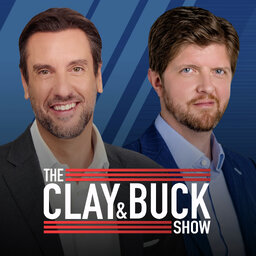
The Clay Travis and Buck Sexton Show
Hour 1 of The Clay Travis and Buck Sexton Show focused heavily on the political fallout from the 2026 midterm elections, examining what Republicans, President Donald Trump, and congressional leaders should do moving forward after significant electoral losses. The hosts argued that conservatives must focus on accountability, self-assessment, and future strategy rather than dwelling on the election outcome. A central theme was criticism of congressional Republicans, particularly Senate leadership, for failing to advance a more aggressive conservative agenda despite controlling Congress. The discussion featured extensive analysis of comments from Ron DeSantis, who challenged Republican senators for not pursuing major policy goals on immigration, judicial reform, and other conservative priorities. The hosts debated whether too much blame had been placed on President Donald Trump for the election results while insufficient scrutiny had been directed at Senate Republicans and their legislative record.
A major portion of Hour 1 examined what Republicans accomplished during the first two years of the Trump administration and what opportunities remain before Democrats assume control of Congress. The hosts emphasized the importance of confirming judicial nominees and executive branch appointments during the lame-duck session, arguing that Democrats would likely obstruct future nominations once they take power. They discussed pending priorities including election security measures, proof-of-citizenship requirements, farm assistance related to tariff impacts, national defense funding, and other legislative goals they believe should be completed before the congressional transition. The conversation repeatedly returned to concerns about Senate procedures, judicial confirmations, and whether Republican leadership maximized its governing advantage.
The program also analyzed President Donald Trump's policy record, with the hosts identifying border security and crime reduction as major accomplishments of the administration. At the same time, they argued that the administration's handling of Iran and its broader foreign policy focus may have become politically distracting. According to the discussion, many voters remained more concerned about day-to-day economic realities than international affairs, creating a disconnect between Washington's priorities and the concerns of ordinary Americans. The hosts suggested that debates surrounding Iran, military engagement, and foreign policy often overshadowed economic messaging that they believe voters wanted to hear.
Another significant topic was the economy, inflation, and voter frustration with affordability. Clay and Buck argued that although inflation has declined substantially from its peak levels, many Americans continue to feel financial pressure because prices remain significantly higher than they were before the inflation surge during the Biden years. They discussed how voter anger over the cost of living, groceries, healthcare, housing, and everyday expenses played a decisive role in the election results. The hosts contended that economic dissatisfaction remains widespread even when traditional economic indicators show improvement, creating challenges for elected officials attempting to communicate economic progress.
Housing affordability emerged as one of the most detailed discussions of the hour. The hosts examined rising home prices, elevated mortgage rates, and the challenges facing younger Americans trying to purchase homes. They argued that many prospective buyers have effectively been priced out of the housing market due to a combination of higher home values and significantly more expensive borrowing costs. The conversation highlighted how homeowners with low mortgage rates obtained during earlier years are reluctant to move, reducing available housing supply and contributing to market stagnation. The hosts suggested that housing affordability and mortgage rates represent some of the most politically significant economic issues facing voters today.
The show also explored election messaging and voter behavior, including why Democrats outperformed expectations and why Republican turnout may have lagged. The hosts debated whether voters switched parties or whether Republican voters simply stayed home. They highlighted arguments from political figures including Vice President JD Vance and discussed polling, turnout data, and voter motivation. The broader conclusion was that affordability concerns and economic anxiety appeared to resonate more effectively with voters than many of the policy achievements Republicans emphasized during the campaign.
Additional political discussion included comments from Ashley Moody regarding lessons learned from the election, reports concerning Marco Rubio's future role that were dismissed as inaccurate, the announced departure of Harmeet Dhillon from the Department of Justice, the electoral strength of Florida Republicans, and anticipation for interviews with Ron Johnson, Ryan Girdusky, and Brian Kilmeade in later hours of the program. The hosts also touched on federal deficits, national debt growth, energy prices, gas prices, and their broader impact on public perceptions of the economy.
Make sure you never miss a second of the show by subscribing to the Clay Travis & Buck Sexton show podcast wherever you get your podcasts! ihr.fm/3InlkL8
For the latest updates from Clay & Buck, visit our website https://www.clayandbuck.com/
Connect with Clay Travis and Buck Sexton:
FB - https://www.facebook.com/ClayandBuck/
IG - https://www.instagram.com/clayandbuck/
YouTube - https://www.youtube.com/c/clayandbuck
Rumble - https://rumble.com/c/ClayandBuck
TikTok - https://www.tiktok.com/@clayandbuck