 Planetary Radio: Space Exploration, Astronomy and Science
For decades, Uranus has puzzled scientists. Unlike the other giant planets, Voyager 2’s 1986 flyby suggested the ice giant emitted no excess heat. Now, thanks to new analyses of Voyager data, decades of ground-based and space-based observations, and refined models, scientists have confirmed that Uranus does radiate more heat than it receives from the Sun.
Host Sarah Al-Ahmed speaks with atmospheric scientist Michael Roman (Assistant Professor at the Universidad Adolfo Ibáñez in Chile) about his team’s new study showing Uranus emits around 12.5% more energy than it absorbs. Together, they explore what this means for our understanding of Uranus’s atmosphere, its bizarre seasonal cycles, the planet’s violent past, and why these findings strengthen the case for a future flagship mission to the Solar System’s overlooked ice giants.
Stick around for What’s Up with Bruce Betts, Planetary Society chief scientist, for a look at Uranus’ newly discovered moon and a new random space fact.
Discover more at: https://www.planetary.org/planetary-radio/2025-uranus-energy-balance

Planetary Radio: Space Exploration, Astronomy and Science
Planetary Radio brings you the human adventure across our solar system and beyond. We visit each wee…Social links
Follow podcast
Recent clips
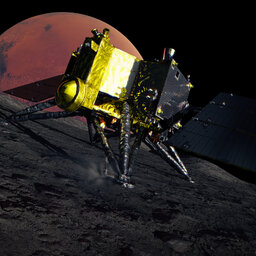
From the Mojave to Phobos: PlanetVac rides with MMX
1:04:21

Space Policy Edition: What does “science as a service” really mean?
1:17:02

2026 NASA's Innovative Advanced Concepts Symposium: Part 2 — Solar sails and breathing beyond Earth
1:00:29