 Newt's World
Newt's World
Join Newt Gingrich, former U.S. Speaker of the House and Ph.D. historian, for the most diverse, informative, and entertaining podcast available. Every…On the night of October 29, 1969, a UCLA student typed two letters into a Stanford-bound terminal before the system crashed—and the internet was born. Newt traces ARPANET's Cold War origins as a decentralized network built to survive nuclear attack, through Vint Cerf and Bob Kahn's TCP/IP protocol, to Tim Berners-Lee's World Wide Web. He argues the internet's true significance lies in a policy choice: the U.S. government built it, then let it go, handing an open network to the world rather than controlling it—a decision that unleashed more innovation than any planned alternative.
In 1 playlist(s)
Newt's World
Join Newt Gingrich, former U.S. Speaker of the House and Ph.D. historian, for the most diverse, info…Social links
Follow podcast
Recent clips
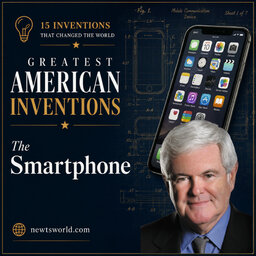
Episode 1029: Greatest American Inventions — The Smartphone
09:24

Episode 1028: Greatest American Inventions — The Internet Search Engine
06:26

Episode 1027: Greatest American Inventions — The MRI Scanner
06:51