 Climate Connections
Climate Connections
A special segment on MONEY FM 89.3's Breakfast Show that brings you on an exclusive audio journey to the ends of the world, covering in-depth environment, natural history, and climate change stories that intertwine with human life on Earth.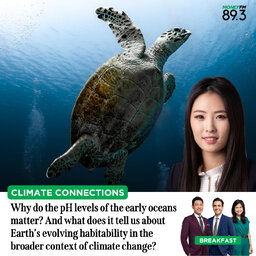
Climate Connections: Why do the pH levels of the early oceans matter? And what does it tell us about Earth’s evolving habitability in the broader context of climate change?
A new study has found that ocean acidity may have prevented life on Earth from developing for the planet's first 500 million years. On this episode of Climate Connections, its study lead, Dr Guo Meng from the Asian School of the Environment at NTU weighs in on how ocean pH has evolved from our ea…
13:01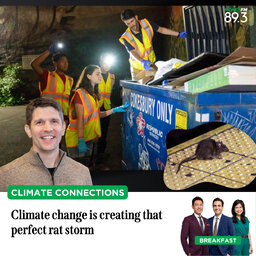
Climate Connections: Climate change is creating that perfect rat storm
Over the years, scientists have linked climate change to rising sea levels, extreme weather and melting polar ice caps. But as the mercury rises, urban rat populations too are increasing. In the first research of its kind, scientists found that 11 of 16 cities studied had significant increasing t…
16:53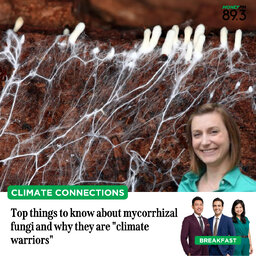
Climate Connections: Top things to know about mycorrhizal fungi and why they are "climate warriors"
Fungi represent an entire kingdom of life on Earth. In fact, millions of species of fungi share our space on this planet. And since soil contains more than three times as much carbon as the atmosphere, what fungi do in the soil could dramatically affect climate change. One group of fungi in partic…
14:44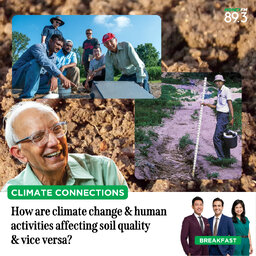
Climate Connections: How are climate change & human activities affecting soil quality & vice versa?
The soil beneath our feet is often forgotten and sometimes thought to be limitless and indestructible. But in fact, soil is key to feeding people, and in preserving the planet we live in. However, data by the Food and Agricultural Organisation shows that over 33% of soils worldwide are already de…
19:40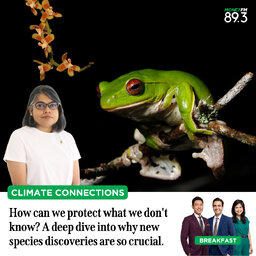
Climate Connections: How can we protect what we don't know? A deep dive into why new species discoveries are so crucial.
Species all over the world are declining at harrowing rates - driven by a mix of factors such as climate change and other human activities. But, there’s a bright light on the horizon. WWF's latest report reveals that 234 new species were discovered by scientists in the Greater Mekong region back i…
18:29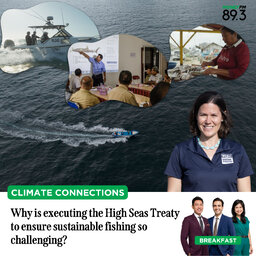
Climate Connections: Why is executing the High Seas Treaty to ensure sustainable fishing so challenging?
To protect our planet - meeting the global ‘30 by 30’ target of safeguarding 30% of oceans by 2030 is crucial. But that will not be possible without effective enforcement of Marine Protected Areas (MPAs). Illegal, unreported and unregulated fishing - or IUU fishing - accounts for one of every five…
09:57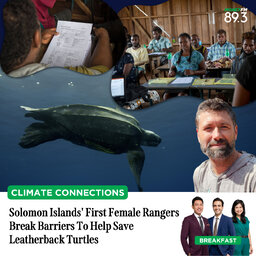
Climate Connections: Solomon Islands' First Female Rangers Break Barriers To Help Save Leatherback Turtles
Leatherback sea turtles are classified by the IUCN as Vulnerable on a global level, but their subpopulation in the Western Pacific are faring far worse than others. According to scientists, that population has declined to just 1,400 breeding adults, leaving them critically endangered. At the foref…
13:32
Climate Connections: From Roots To Reef - Breathing new life into mangrove ecosystems in Lombok, Indonesia
Over the last three decades, deforestation has led to a 40% reduction in forest cover in Indonesia. Mangroves, one of the most essential ecosystems for coastal communities, have taken the fall in particular, with excessive logging activities reducing the seawater-tolerant species along coastlines.…
14:03
Climate Connections: Mission Blue - "Her Deepness" Dr Sylvia Earle's Lifelong Quest To Turn The Tides For Our Blue Planet
The ocean holds clues to past civilisations and cultures, provides a rich resource for new medicines and treatments, but more importantly, is home to millions of undiscovered species. Ocean scientists around the world have been seeking to unlock its secrets, but only just over 20% of the ocean floo…
17:37
Climate Connections: Are you underconsuming what you have?
Do you use your things for what they are worth before throwing it out? With a lot more focus placed on fighting the effects of climate change, the pace at which we’re using our planet’s resources has also come into the spotlight. According to the World Economic Forum, high-income countries use abo…
13:07