Join Pam Jahnke for the latest farm news. Heard daily on WOZN 96.7 FM and 1670 AM in Madison Wisconsin from 5-6am. Also heard on affiliate stations all over Wisconsin.
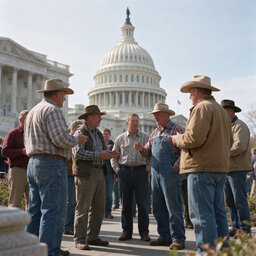
Former House Ag Committee Chairman and Minnesota Congressman Colin Peterson tells the Mid-West Farm Report about the recently formed Midwest Council on Agriculture and their efforts to get more Midwestern influence on federal farm policy. He also explains why he believes there is not a crisis in the dairy industry now.
A Wisconsin-grown Christmas tree is officially at the White House! It will be featured as part of the holiday display in the Blue Room. Farm Director Pam Jahnke talked with David Chapman while visiting his Silent Night Evergreens Farm near Endeavor. She learns what it takes to grow a tree for this type of honor, along with why it's so unique for three generations of this same family -- to have a tree selected for the White House.
Potlucks. In Wisconsin it automatically conjures up visions of a full table of miscellaneous bowls and dishes. Not everyone is familiar with potlucks. Neither the food it can highlight or the people it can bring together. Teri Barr talks with Karl Schatz and Margaret Hathaway. This couple recently started "Community Plate," a potluck get together featuring home-made food, along with recipes and story sharing. The conversation covers everything from knowing how to cook using farm fresh ingredients to the importance of gathering with others, and we even touch on artificial intelligence! Learn why they have a new goal: to organize 10 thousand potlucks across the country, including more than 150 in Wisconsin, by July 4th of next year! Find more information at: community plate dot me. A little warm up in Wisconsin weather today, but there is a sliver of a chance we could see a snowflake or two, depending on where you're spending your Thanksgiving. Stu Muck paints the picture. Wisconsin born and focused on his neighborhood. Pam Jahnke visits with Josh Pipping, owner/operator of JP's Tank. While at a job site in the Rosendale area, she finds out about Pipping's philosophy of helping his community. One way he does that is by offering apprenticeship opportunities in his company. Pipping says it not only helps his labor supply, it helps the community overall. Paid for by JP Tank. A port strike has been averted in California. Pam Jahnke gets the update from Dan Halstrom at the U.S. Meat Export Federation. Demand for protein under the influence of GLP1 drugs will be the focus on a December 1st conference in Madison. The Professional Dairy Produers will be listening to dairy ingredient companies and consumer trend monitors about where dairy proteins are going. Pam Jahnke highlights "Bullish on Dairy". Chris Hanson with Hanson Honey Farm tells Larry Lee that his family’s beekeeping business has become more diversified. Hanson says, like many businesses, he does a fair amount of business by selling online. And, he says their website is serving more customers compared to selling on Amazon.
Do you remember the last time you took part in a potluck dinner? One couple is encouraging people to reconnect by sharing food and stories through potluck gatherings. They call it "Community Plate." Teri Barr talks with Karl Schatz and Margaret Hathaway to learn more about it, including their goal of helping rural communities, farmers, and food organizations join together in hosting 10,000 potlucks across the country -- more than 150 in Wisconsin -- by July 2027. (Potluck photo source: Community Plate)
USDA Meteorologist Brad Rippey tells the Mid-West Farm Report the El Nino pattern might be the strongest on record, and it likely means a warmer winter with less snow and more risk of drought in parts of the Great Lakes region.
At Aug-Mar Farms, it's important for the family's farm to continue on. Jared Zirbel and his parents, Dave and Denise, join us. They have Kenosha County's most recent Century Farm. It's been in their family for over a hundred years. With a passion for farming and an excitement to one day milk his own herd of cattle, Jared purchased 40 acres of the family's farm, now carrying on the legacy.
Custom harvest operations across the U.S. play a crucial role in getting our crops in each and every year. Paul Paplow of Paplow Harvesting and Trucking joins Kiley Allan. His operation originates in Minnesota, but spans much farther than that. He says they spend time in Texas, Montana, the Dakotas, Minnesota, Iowa and Oklahoma.. Covering that many miles in a single season certainly has its challenges. Paul tells us about the 2026 season.
Lake Nokomis Cranberries is a cranberry farm first and an agricultural tourism stop second. Mike and Alisa Zawistowski join me. They're managers at Lake Nokomis Cranberries. Over a decade ago, their family started to welcome people to the farm to teach them where their food comes from. Now, the farm's robust offerings include an on-site winery, gift shop, and rental. The success and growth their operation sees wouldn't be possible without robust infrastructure. They tell us how high-speed internet plays a significant role on their operation.
If you've been in the grocery store recently, you've likely seen high prices. Kiley Allan spoke with American Farm Bureau Federation's Director of Communications, Mike Tomko. According to the American Farm Bureau Federation's survey, turkey is 10% more expensive this year. Tomko says we can largely attribute the raise to disease pressures and a recovering turkey flock.
The 18 foot concolor fir from Wisconsin has been delivered to the White House. That ceremony may have only taken minutes, but the growth, harvest and delivery of that tree took decades. David Chapman of Silent Night Evergreens in Endeavor made the journey with his family for their first time. He talks with Pam Jahnke about what it took to get that tree ready and on its way. Crisp and cold today for Wisconsin. By tomorrow, some areas could see their first seasonal snowflakes. Stu Muck focuses in on the details. There's a good sized dairy that's going on the auction block near Stratford. Ashly Huhn from the Steffes Group says if there's someone looking for the opportunity to expand, this is it. Paid for by Steffes Group. Food waste isn't something most households think about, but if you're feeding nearly 9,000 - that's an issue. Malorie Garbe, Housing Sustainability Coordinator for UW-Madison. She says they use a program called Leanpath to help calculate what food volumes to minimize food waste. Bears get Thanksgiving and Bulls get Christmas. That's a market adage that may apply again this year. John Heinberg, market advisor with Total Farm Marketing in West Bend explains why that phrase applies.
Veronica Nigh with The Fertilizer Institute explains how Canada and China have added, or are about to add to certain fertilizer supplies and how the conflict in the Middle East is making phosphate expensive and hard to get.
Taryn Fischels from John Deere explains the new artificial intelligence feature that has been added to the John Deere Operations Center platform.
A Wisconsin-grown Christmas tree is headed to the White House! Silent Night Evergreens in Endeavor is delivering Wisconsin's 10th official White House Christmas tree. It also continues a Chapman family tradition spanning three generations. David Chapman shares the process with Pam Jahnke in this quick audio clip.
Governor Tony Evers proclaimed Thursday, November 19, 2026, as National Rural Health Day in Wisconsin! It's meant to recognize the important role rural health care providers play in the success of small communities across the state. Pam Jahnke talks with Wisconsin Office of Rural Health Director John Eich to learn why rural hospitals are continuing to struggle with issues like maternity care, workforce shortages, and financial sustainability and what can be done to make a difference for Wisconsin's rural residents.
Are you storing old televisions and computers in your shed? Or maybe you have no longer useful smartwatches and fitness trackers in a drawer? If you live in rural Wisconsin -- it is finally getting easier to find opportunities to recycle those electronics. Teri Barr talks with Department of Natural Resources E-Cycle Wisconsin Coordinator Erik Flesch to learn why expanding access is helping residents get ride of unwanted electronics responsibly, and how it's an important way to protect the environment.
At first glance, you'd think temperatures being in the upper 50's and lower 60's this late into November would be great news for Wisconsin farmers. Well not all Wisconsin farmers are happy. Larry Lee learns that this warm weather is creating challenges for the state's potato producers. Andy Diercks is one of those. He's the operator of Coloma Farms in central Wisconsin. Yes, it'll be very mild today with increasing winds. Stu Muck has your daily forecast.Tuesday was the big day for Silent Night Evergreens in Endeavor. The harvest of the White House Christmas tree! David Chapman, owner and operator of the farm, tells Pam Jahnke that it takes a village to get that job done. From specialty harvesting equipment, to diligent truck drivers. The tree is on its way! Data centers are finding pushback in rural communities that's costing companies dollars and momentum. Quint Shambaugh, Principal, Pinion, is studying the data from public meetings and county actions. It's soup season! Or it will be! With gun-deer hunting season opening this weekend, coming back from the woods and fields with a bowl of hearty soup waiting doesn't depend on weather. Angie Horkan with the WI Beef Council joins Pam Jahnke to share recipes and cuts that will work for those hearty meals focused around the bowl. Paid for by Equity Cooperative Livestock Sales Association.
Whether it's your center of the plate protein or a creative side dish, Wisconsin agriculture is delicious on your dinner plate all year round. But it seems like Thanksgiving was maybe a holiday curated to showcase exactly what we raise in this state. From cranberries and mashed potatoes to your protein, you can find nearly all of it raised right here in the state of Wisconsin. Ronnie Viljoen is the co-owner at Pheasant for Dinner. As one of the few commercial table pheasant operations in the country, he says their product is highly sought after around Thanksgiving. He tells us more about how he started his operation.
The holidays are almost here, and whether you’re planning Thanksgiving dinner or getting ready to bake Christmas cookies, Wisconsin butter deserves a spot on your shopping list. Joining us is Wisconsin dairy farmer Pat to talk about holiday traditions and the farm families behind our favorite dairy products.
When that old TV gives up or your swap out your computer monitor, you have someplace to dispose of it. In rural communities - they do not. Teri Barr learns that there's efforts underway to try and give rural communities options. Erik Flesch, is the Department of Natural Resources, E-Cycle Wisconsin Coordinator. He says in just four years of grant funding, 59 counties across Wisconsin have added free one-day e-cycling events, along with nine new regular collection areas now open in rural parts of the state. The grants are supported by the manufacturers recycling the electronic parts and pieces. Flesch says the DNR has really focused on helping farmers and rural residents get their electronics recycled. Next up - battery recycling! More above average temperatures on the way. Stu Muck says winds will pick up today, but they bring with them more warm weather. Farm land values are holding firm at the most recent auctions Ashley Huhn's been involved with. Pam Jahnke finds out what it takes to buy land online with the Steffes Group. Paid for by Steffes Group. Lenders are a little more optimistic about the 4th quarter of 2026 according to Joe Mahon, Regional Outreach Director, Federal Reserve Bank of Minneapolis. He says yields are better then many were projecting. Despite that momentum, Mahon still says lenders are preparing for an onslaught of operating credit requests before the end of the year. Quiet news day in commodities. John Heinberg, market advisor with Total Farm Marketing in West Bend says that biofuels have been interesting to watch. As consumers search for financial options at the pumps, ethanol production has climbed. U.S. soybean crush has also set new records. Now, we'll see if anything of an agriculture nature comes out of this weeks meeting between President Trump, President Xi and President Putin.
Wisconsin agriculture is built on the people who work the land, care for livestock and contribute to our rural communities. Behind those farmers is an organization committed to ensuring their voices are heard, their interests are represented and their opportunities continue to grow. As Wisconsin;s largest general farm organization, Wisconsin Farm Bureau Federation (WFBF) brings together farmers and agricultural advocates from across the state. Rooted in a grassroots, member-driven approach, Farm Bureau gives members a voice in the decisions that affect their farms, businesses and communities. From advocating for sound agricultural policy and developing the next generation of leaders to connecting consumers with the people who grow their food, WFBF is the unified voice supporting agriculture today and for the future. In the inaugural episode of From the Ground Up with Wisconsin Farm Bureau, WFBF Chief Administrative Officer Bradley Uken joins the Mid-West Farm Report to introduce listeners to the organization and the people, purpose and principles behind its work. Learn more about Wisconsin Farm Bureau's commitment to serving its members, amplifying the voice of agriculture and building a stronger future for Wisconsin's farming community. Learn more at wfbf.com.
University of Wisconsin Extension Educator Kevin Erb updates us on statewide fall manure application.
While each crop, and for that matter each field, is different, growers often need to apply things like water, herbicides, and fertilizer to ensure a high yield and consistent product. Farmers make those careful decisions based on things like their personal experience, resources, and research that they have studied. But now, there may be a new way to tailor more specifically to their fields. Yi Wang is an Associate Professor and Extension Faculty Member in the Department of Plant and Agroecosystem Sciences at UW-Madison. She and her team have been using a quadruped robot in potato fields. This robot, that they're conversationally calling "the dog," has four legs and, for lack of better words, walks around the field. She tells us how technology such as this robot dog can provide helpful data to growers. Photo courtesy of Michael P. King
On the campus at UW–Madison, the food service feeds nearly 9,000 students at any given time, and feeding those students is no small task. Mallorie Garbe, the Housing Sustainability Coordinator, and Peter Testory, the Director of Dining and Culinary Services for the Housing Division, joined Kiley Allan. They say that while feeding the students requires a lot of food and ingredients, part of their role is also to reduce and eliminate the amount of food waste at the end of the job.
Just a short scroll on the internet will show that as soon as home bakers realize their tried-and-true cookie recipes are turning out differently, the first thing they turn to is butter. While the claims of these self-proclaimed internet reporters may vary, many of them suspect the composition of the butter has changed in recent years. Two butter makers and graders from the Center for Dairy Research joined Kiley Allan. Gina Mode and Melissa Houfe say the short answer is no; the butter hasn't changed. They point to the oldest federal food standard that is still in force. The Butter Act reads that U.S. butter is defined as the food product which is made exclusively from milk or cream, or both, with or without common salt and with or without coloring matter. The act dates back to 1886 and in 1923 was updated to also include that the product must contain no less than 80% by weight of milk fat.
Another class is underway at the Farm and Industry Short Course on the UW-River Falls campus. Mary Holle is the Program Director and has been connected to the program since it moved to River Falls. She visits with Pam Jahnke about the unique perspective FISC offers students. Many of these students are currently involved in agriculture, but still realize they must continue to learn. Holle says at FISC, it's all about hands on learning. Wow - what a mild week on the way. Stu Muck says the down side is no tracking snow for hunters headed to the woods this weekend.It's like a holiday in Wisconsin. The beginning of the gun-deer hunting season. The WI Department of Natural Resources is preaching safety again for this year's hunt. They're focused on weapon safety, and also ATV/UTV safety. The staff will also be focused on some geography for collection of samples for CWD(chronic wasting disease) research. No answers yet on the distribution of funds in the Harvest Relief Fund. USDA has created a website for the program that's supposed to encompass an $8 billion infusion to offset high fuel costs. It may not look like it, but the hoiday's are around the corner. That's big business for Wisconsin dairy. Pat Schroeder, Grant county dairy farmer and DFW board member, focuses in on butter as a key ingredient for holiday success. Kiley Allan finds out about the volumes that consumers buy during the holidays. Paid for by Dairy Farmers of Wisconsin.
Wisconsin's 2026 Honey Queen Emily Skala discusses her year of promoting Wisconsin honey products with Mid-West Farm Report's Larry Lee
Chris Hanson and his family raise bees at their Rhinelander farm, but the business has expanded from honey to a storefront, bee transportation, and building their own line of beekeeping supplies.
Emily Skala has spent the past year promoting Wisconsin honey and educating people about the benefits of bees and honey.
On Thursday, the Sand County Foundation, Dairy Farmers of Wisconsin, American Farmland Trust and the WI Farm Bureau Federation announced that Schoepp Farm of Lodi, was the 2026 Leopold Conservation Award winner. Kiley Allan was in the audience for the news. She spoke with Dave Schoepp, who along with his wife, Nancy, and son, Ron, operates around 500 acres. Their land is on the edge of the sensitive Driftless Region. Schoepp says they always keep that in mind whether it's crop farming or grazing cattle. Weather is brisk today, but improves as the weekend unfolds. That's the promise from Stu Muck. He tells Pam Jahnke the state should be back in the 50's again next week for the most part. A dry pattern should also remain. This is a critically important time of the year for livestock operations and their manure management plan. Larry Lee talks with crop and dairy farmer, TJ Drager from Marathon. Drager explains that the costs of proper manure management have gone up this year, and it's not just diesel costs. Drager explains that people power is needed to get the job done, and that's expensive. He also notes that fall manure management can be more expensive then spring because of hauling. He notes that usually you're hauling manure farther from the source in the fall versus spring. When you've had a farm in the family for 100 plus years, there's many memories to reflect on. That's why Memory Farms in Wood County took that to heart when naming their property. Connie, Jason, and Dale Behrend share the history and traditions of their multi-generational property. The name "Memory Acres" is a direct nod to the many family traditions, milestones, and generations of memories tied to living and working on a farm that has been in the family for over a hundred years. Kiley Allan prompts the family to share some of those memories.
At the 2026 Leopold Conservation Award luncheon, Ron Schoepp said farmers who do this kind of conservation work are pretty special. And those special people practicing conservation are the reason the Sand County Foundation holds their Leopold Conservation Award every year. According to their website, the award honors farmers, ranchers and forest landowners who go above and beyond in their management of soil health, water resources and wildlife habitat on working land. The recipient of this year's 2026 Wisconsin Leopold Award is the Schoepp family. Ron Schoepp joins me of Schoepp Farms LLC. He tells us a little bit about the conservation practices on their farm. Photo courtesy of the Schoepp family.
Chances are, when making small talk with someone, you'll inevitably bring up the weather. But the reality is that for our farmers, it impacts so much of what we do that it's more than just small talk. The folks at the Wisconsin State Climatology Office know this to be true. What they also know is that weather impacts everybody differently, and that's exactly why they're hosting the Extreme Weather Roadshow across northern Wisconsin. Amanda Latham joins us. She's the Climate Outreach Specialist.
Drone technology has become a part of production agriculture. As farms become acquainted and accustomed to it, they want to know what more it can do. Larry Lee finds out from Adam Meddaugh with American Drone. Meddaugh says prices on drones have come down, while the capacity and abilities of the technology have gone up. Chillier weather with a wind for today. Stu Muck says it may not last long, but it's the first taste of what's ahead weatherwise. Sunshine returns tomorrow, but the temperatures will remain a little below average. Next week staff from the White House will be back in Wisconsin to harvest the Christmas tree that will adorn the blue room of the White House. Pam Jahnke visits with grower, David Chapman, about the family tradition that this has turned into. Chapman says this will be the family's fifth trip to the nation's capitol with a tree. Volume is the story for dairy this week. Mike North, prinicipal with EA Risk in Platteville, joins Pam Jahnke to discuss. Consumers are mindful of what they're buying for groceries, and that's a direct reflection in dairy prices. The good news according to North is that retail promotions have increased. That's at the same time that the amount of cheese produced per vat slides lower.
Dr. Dewey Caron explains why mites are a problem for honey bees, how viruses harm a hive, and what beekeepers can do to protect bee health. He also says lessons can be learned from a colony that didn't survive.
Farm to Power is a non-profit, non-partisan community that shares information and opportunities about renewable energy on their land. Steve Boe, executive director, says this is a vibrant conversation that changes from community to community. Boe says one of the elements that attracts conversation is the consistent source of income that these renewable energy projects can provide. Jill Welke finds out more about how these conversations happen. And so it begins. Wisconsin's on-again, off-again tease of nice versus nasty weather begins. Stu Muck explains how things are changing beginning today. As the weather changes, animals start looking for ways to make sure they can make it through. For Wisconsin's growing black bear population, that beeyard with its honey hives is pretty attractive. Larry Lee talks with WI honey producer, Nick Thill from West Bend. Thill's experienced losses from bears and says it's expensive. Not only the lost crop, but the rebuilding of the hives. With holiday baking ramping up, some bakers say their tried and true recipies aren't tasting or performing the same. They're blaming butter! We've heard your questions and Kiley Allan turns to Gina Mode & Mellisa Houfe from the Center for Dairy Research for answers. The team says that butter grades and standards have not changed since the early 1920's, but today there are about 8 different variations that can cause confusion.
Wisconsin Pork Association's Executive Vice President Keri Retallick is retiring, and Program & Marketing Director Morgan Worek is stepping up into the role. They also explain changes including the new Wisconsin Pork Summit, as they go their own way after two decades with the Corn-Soy Expo.
Being a Wisconsin cheesemaker isn't as easy as it may seem. The state is very protective of its cheesemaking reputation, and guards it by requiring a lot of those who make the cheese. Wisconsin and Switzerland are the only two places in the world that require a license for cheesemaking. Teri Barr found out about that challenge from Waunakee sheep farmer, Beth Anderson. Anderson just earned her cheesemaking license, after completing 250 hours of work under a Master Cheesemaker. She is the next generation of cheesemakers!Anderson's next step is buying the state-approved equipment to make and sell her own cheeseShe is a member of the Sheep Dairy Association of Wisconsin which co-hosted the Open House at Cedar Grove Cheese in Plain. One reason why Anderson's moving forward in her career is because Bob Wills, owner and master cheesemaker at Cedar Grove, took her under his wing. The experience was invaluable to advancing her cheesemaker goals. Wills is one of just 70 Wisconsin Master Cheesemakers. Enjoy today because we'll all experience a bitter shock on Wednesday. Stu Muck says some of northern Wisconsin may actually see snow before the end of the day Wednesday. Every farm has a story to tell. Telling that story when it comes to a retirement sale is incredibly important to the Steffes Group. Ashley Huhn explains that every operator cares about their operation, and sharing what they've done to maintain or operate equipment is an important element. Paid for by Steffes Group. Keri Retallick, current executive vice president of the WI Pork Association, has announced her retirement at the end of the calendar year. Retallick has served that organization and the industry for 41 years. The good news for the organization is that Morgan Worek will take over leadership as Keri exits. Pam Jahnke shares the group's plans and a new event they're organizing for 2027. Markets have been focused on the AI industry and a big selloff. That's also brought commodities down with it. John Heinberg, market advisor with Total Farm Marketing in West Bend explains why that happened. He also takes a look at the hog and cattle market. Big selloff last week. He explains.
Delaney Craighead discusses different types and uses for honey, honey bees, and their importance to American food and agriculture, and how people in towns or the countryside can help bees and other pollinators thrive.
Looking out the window of my office in Madison, it’s cold outside. But I invite you to imagine a warm, sunny day with me. It’s mid-afternoon, and we slide into the pickup truck to drive down a few country roads with my grandfather. With a contagious laugh and a few quick-witted jokes, he tells a story about his friends who used to live next door that he played euchre with. They’ve since moved, and their house no longer sits a mile from his. The reality he describes—where towns, churches, and homesteads are dwindling—is one we see across rural America. Loka Ashwood is a professor in the College of Agricultural and Life Sciences at UW–Madison. After a personal revelation of her own, she began a project to help document these lost homes across Wisconsin. Her hope is to help people better know rural history so they can grow a love for the places that make rural living vibrant.
As the days get shorter and the weather turns colder, it’s time to fall in love with warm and cozy beef soup recipes. Angie Horkan wit the WI Beef Council joins Pam Jahnke to talk through some of your options! Beeftips.com has gone through some remodeling, so be sure and find all your recipe options there! This update brought to you as a service of Equity Livestock Cooperative Sales.
The Wisconsin 4-H Foundation has been dissolved. Pam Jahnke finds out why from Jessica Jens, WI State 4-H Program Director. The 4-H Foundation board for 75 years had been the philanthropic fund raising arm for Wisconsin 4-H. Ultimately the cost of administering the program started to eat away at the dollars available for 4-H acitivities. Now, the Wisconsin Foundation and Almni Associaton (WFAA) will be assuming the fund raising duties. Jens reassures all donors and endowments that their wishes for funds will still remain in tact, by law. In response, Jens has created the WI 4-H Positive Youth Development Advisory Council that will gather for the first time this week. She says this will ensure the community of WI 4-H has a place at the table for this multi-generational program. Beautiful weather to start the week, but more seasonal temperatures by Wednesday. That's the outlook painted by Stu Muck for our weather this week. With a growing population to feed, many turn to farmers and say 'what are you going to do'? A new group's been formed to put some of that responsibility on the shoulders of food processors. The Center for American Food Power was launched in March, and about 35 organizations and leaders are part of the planning process with more to come. Mike Davis finds out about it with Brett Sciotto, CEO of Idealyst Innovation, one of the lead organizations. Sciotto says they want to hear from the best and brightest across the value chain and get them involved. 10 Wisconsin 4-H youth were recognized on Saturday for the highest honor a member can receive. The state 4-H Key Award. Pam Jahnke gives a quick rundown of the honorees. Plus potluck's are a part of most Wisconsinites culture, but why? The Mid-West Farm Report will have that story this week, but Karl Shatz, organizer of Community Plate, teases that there's more to potluck's then you may think. When you think about what keeps Wisconsin dairy strong, you probably picture farmers caring for their cows and cheesemakers making award-winning cheese. But there’s another important part of that story: the research and innovation helping turn our milk into products people want to buy. The Center for Dairy Research (CDR), is located at the University of Wisconsin–Madison, and it brings together scientists, cheesemakers, and dairy experts who help our industry solve problems and develop products. Rick Roden, Echo Valley Farms and Dairy Farmers of Wisconsin Board of Directors, explains some of the cutting techniques and innovations being developed thanks in part to funds from dairy operators like him. Paid for by Dairy Farmers of Wisconsin.
USDA recently announced the Harvest Fuel Relief Program to help farmers deal with the high cost of diesel fuel, but a dairy organization says it's not just the row croppers that need assistance since a typical dairy farm uses fuel every day of the year, and not just during planting and harvest time.Sherry Bunting with the American Dairy Coalition says they've conducted two member polls, with one of them getting more than 450 responses in 10 days pointing out farmer concerns about fuel costs. Larry Lee listens in. Sunshine today and overall a nice weekend for Wisconsin. Stu Muck says this may be the last weekend where we see temperatures near 60 degrees or better. Everybody's looking for a deal, and when it comes to fall produce - they're out there! Kiley Allan helps us understand what you need to do to extent the life of those "deals" in fresh produce. Bulk potatoes, onions, carrots and more make look good, but only if you store them properly. She finds out the tips and tricks from Heather Quackenboss, UW-Extension Home Educator in LaCrosse County. Farmers like "a deal" just like anyone else. So when farmland near you comes up for sale, you know it could be a once-in-a-lifetime opportunity. Property love is what Dr. David Kohl, professor emeritus at Virginia Tech calls it. When you'll do almost anything to get that land even if it's not good for your bottom line. A single man from Norway made his way to Wisconsin back in 1861. Finally by 1864 he had the means to purchase his first farm. That farm is still in the family hands of Oscar Ryerson. Descendents Sue Ritchie and Peter Redinger are keeping the farm going and in presentable shape despite living out of state. Sue explains the early years of their family moving from New York to Columbia county to keep the farm going. Today they enjoy maintaining the buildings and have planned for the next generation to continue the story.
Rebekah Sweeney with the Wisconsin Cheese Makers Association tells the Mid-West Farm Report the USDA and the Office of Management and Budget recinded their recent rule that would have required the four Dairy Business Innovation Initiative programs to provide 25% matching funds for their federal dollars, which Sweeney says would have killed the entire program.
When you think about what keeps Wisconsin dairy strong, you probably picture farmers caring for their cows and cheesemakers making award-winning cheese. But there’s another important part of that story: the research and innovation helping turn our milk into products people want to buy. The Center for Dairy Research (CDR), is located at the University of Wisconsin–Madison, and it brings together scientists, cheesemakers, and dairy experts who help our industry solve problems and develop products. Rick Roden, Echo Valley Farms and Dairy Farmers of Wisconsin Board of Directors, representing District 18 (Sheboygan, Ozaukee, Washington, Waukesha, Milwaukee, Racine and Kenosha) counties is fascinated by what happens there. He explains some of the cutting techniques and innovations being developed thanks in part to funds from dairy operators like him.
The 99th National FFA Convention is now history, but plans are already ramping up for the 100th celebration in 2027. Jill Welke finds out what it takes to keep this behemoth of an organization moving forward from Dr. Scott Stump. Stump is the National FFA's Chief Executive Officer in Indianapolis. He explains to Welke how the group coordinates annual activities with the City of Indianapolis, and relays that information to chapters across the U.S. Sunshine will return to Wisconsin beginning on Friday. Stu Muck says despite light rain, there are still some combines rolling through corn fields. Fresh faces, clean slates and empty notebooks. After Tuesday's election, Wisconsin agriculture's getting ready to welcome fewer legislators than ever coming from agricultural backgrounds. The burden falls directly on producers to build relationships from scratch, demystify modern food production, and ensure the realities of the farm gate aren't lost in the committee room. Pam Jahnke finds out how that will happen from Jason Mungniani, Executive Director of Government Relations with the WI Farm Bureau Federation. He says the message was clear with the change of party direction. Harvest may not be complete, but that's not stopping growers from looking ahead to 2027. Larry Lee notes that technology is becoming a bigger and bigger part of their plans. Drones are now doing more for farms than ever before. Adam Meddaugh with American Drone explains what attracts farms to the equipment. Dairy largely stood on the sidelines during the election process. Now it's time to reengage. Kiley Allan finds out how that's happening from Jenny Wackershauser, dairy analyst with EA Risk in Platteville. Wachershauser says they're continuing to closely monitor holiday shopping and ingredient demand. Now, they also have to keep an eye on HPAI that's already been detected in some dairy herds in the Pacific Northwest.
Agricultural education is a powerful tool that emphasizes hands-on learning and career readiness for students that participate in the program. But, programs can't reach their full potential without support. Jeff Wright supports agricultural education in two facets: both as the superintendent of the Sauk Prairie School District, and also serving on the Wisconsin Agricultural Education and Workforce Development Council. He tells Kiley Allan what the council, otherwise known as WAEWDC, do to support agricultural education and workforce development right here at home in the state of Wisconsin. Photo: Jeff receiving an Honorary State Degree from Wisconsin FFA Association. Photo courtesy of Jeff Wright.
Adam Meddaugh with American Drone tells Mid-West Farm Report how changes in drone technology and the needs of farmers have driven more drone use. He also gives details about the upcoming Midwest Drone Conference that will be held December 17–19, 2026, at the Holiday Inn Convention Center in Stevens Point, WI.
The wave that swept across the United States Tuesday evening is going to mean major changes in agriculture leadership. Pam Jahnke visits with Jason Mugnaini, Executive Director of Government Relations with the Wisconsin Farm Bureau Federation. Although not all races have been called on the national scene as the conversation is recorded, he shares his 'first reactions' to the change.
Strange colors and textures being noticed in our Wisconsin soybeans are getting attention. What is it and why is it happening? Kiley Allan gets the goods from Dr. Damon Smith, UW-Extension Plant Pathologist. He says it generally is traced to seed quality, but is costing growers at the elevator. Rain will continue through the next 36 hours according to Stu Muck. Temperatures will stay moderate in the south, with overnight freezing temps in the north. Brant Smith is the district sales manager for Wyffels in northern Illinois. There, the harvest is about 80% complete. Smith tells Pam Jahnke that there hasn't been many harvesting issues to deal with, which is welcome news. He reminds growers to take a look at the agronomy sharing feature on their website to track yields across the Midwest. Paid for by Wyffels Hybrids. Election results will mean big changes in agriculture leadership on the state and national scene. Pam Jahnke gives a brief overview of the race results from last night. That old TV, desktop computer - even cell phone! When you're done with it, what do you do with it? If you're in an urban area, you have options. If you're in the country - you generally don't. Teri Barr investigates the e-cycling program through the WI Department of Natural Resources. Erik Flesch, Department of Natural Resource, E-Cycle Wisconsin Coordinator. He says in just four years of grant funding from the manufacturers who are recycling the electronic parts and pieces, 59 counties across Wisconsin have added free one-day e-cycling events, along with nine new regular collection areas opening in rural parts of the state. Flesch says the DNR has focused on helping farmers and rural residents to get electronics recycled. Battery recycling is next!
Whether you're preparing to feed an influx of people during the holiday season or you just like a good deal, it's a great time of year to find bulk potatoes and onions for sale across the state of Wisconsin. Heather Quakenboss joins me; she's a UW–Madison Extension's human development and relationships educator. She has a few tips and tricks to make sure that the multiple pounds of potatoes and onions you just bought don't go bad.
Rain hasn't completely slowed down the corn harvest in Northern Illinois. That's the word from district sales representative, Brant Smith. He says the area has enjoyed almost ideal harvest conditions so far even with the light rain.