 Disrupted

Disrupted
Disrupted is about the changes we all encounter and the forces driving those changes. Some disruptions spark joy and possibility. Others move us to take action and re-evaluate our world. But the show isn't just about those disruptions; it’s about embracing them, exploring new perspectives, and feeling more connected to ourselves and our communities. Host and political scientist Khalilah Brown-Dean…Social links:
Follow the podcast:
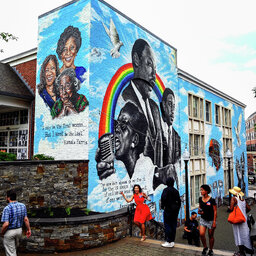
Civic engagement beyond election day
We just witnessed a historic election. People are still feeling a lot of emotions about the change we’ve seen. But change doesn’t only happen on election day— it happens every day. So how can people channel the emotions they are feeling into work that goes beyond the ballot box? This hour, we’re t…
48:59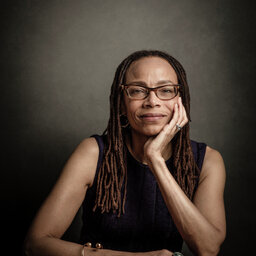
Dorothy Roberts on what her parents’ research on interracial marriage taught her about her own family
As far back as Dorothy Roberts can remember, her father’s book on interracial marriage loomed large. He worked on the book for decades, but never finished it. As an adult, Dorothy decided to go through old boxes of her father’s notes. What she found gave her insight not only into her father’s resea…
48:59
Legal scholar Kimberlé Williams Crenshaw reflects on being a 'Backtalker' and its consequences
Kimberlé Williams Crenshaw's work as a legal scholar has been massively influential. She coined the term “intersectionality,” which refers to the way multiple interlocking systems of power overlap to shape people's lived experiences. Her work has also faced its share of pushback. She came up with …
48:59
Childbirth and postpartum health, from a firsthand account to a look at disparities
Giving birth can have a serious impact on a person’s physical and mental health. Postpartum psychosis has been in the news recently due to the Lindsay Clancy case, but that is just one of many challenges that people can face during and after childbirth. 1 in 8 people who give birth experience postp…
48:59
Beth Simone Noveck says AI can change democracy for the better— if we choose to use it that way
A lot of conversation around AI focuses on it as an existential threat. But if AI has destructive potential, does it also have the capacity to do good? This hour, we're talking about AI and the choice we can make about how we use it. Our guest is Beth Simone Noveck, Director of the Burnes Center fo…
41:07
Weight stigma and the connection between anti-Blackness and anti-fatness
In the United States, we talk a lot about discrimination. But one form of discrimination that we don’t talk about enough is discrimination based on body weight. It affects everything from our employment prospects to our medical care. But it actually remains legal in almost every state in the U.S. …
48:59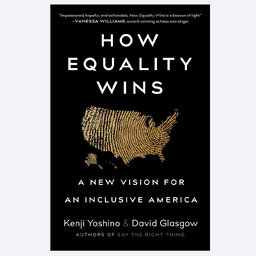
In divided times, how do we build an inclusive future?
The U.S. feels divided. That division is backed up by data. According to the American Psychological Association’s 2025 Stress in America Survey, 62 percent of adults said societal division was a significant source of stress in their lives. So how can we move forward with inclusion rather than divi…
48:59
Senator Chris Murphy on the ‘Crisis of the Common Good’
In 2012, Connecticut voters chose Chris Murphy as a replacement for retiring senator Joe Lieberman. He was the youngest U.S. senator serving at the time. And in the years since, his national profile has grown. He's been a vocal advocate for gun reform and become a high-profile critic of the Trump a…
48:59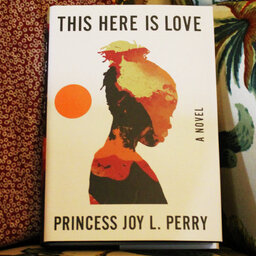
Princess Joy L. Perry’s award-winning novel ‘This Here is Love’ continues Harriet Beecher Stowe’s legacy of literary activism
Princess Joy L. Perry’s novel This Here is Love tells the interlocking stories of an array of characters in Tidewater Virginia. It’s a complex narrative that takes place in the 1690s as the hierarchies of slavery are still developing. Those hierarchies are complicated by further hierarchies— indent…
48:59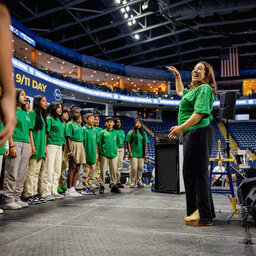
Reflecting on what new generations can carry forward as we remember 25 years since 9/11
Many Americans can tell you exactly what they were doing 25 years ago when they learned the United States had been attacked. But for a younger generation, the attacks are something they’ve only learned about in history class. With that in mind, it’s time to think about what we want future generati…
48:59