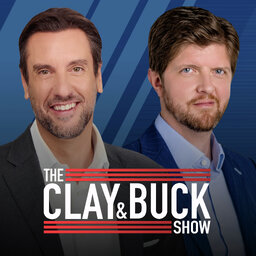
 The Clay Travis and Buck Sexton Show
Hour 3 of the Clay Travis and Buck Sexton Show was highlighted by an extensive interview with Attorney General Todd Blanche, who discussed the Trump administration's Department of Justice priorities, including violent crime reduction, border security, fraud prevention, drug trafficking enforcement, and public safety initiatives. The conversation focused heavily on law enforcement efforts in Atlanta, where federal, state, and local agencies are working together through Homeland Security task forces to combat narcotics trafficking, gang activity, human trafficking, and financial crimes. Blanche highlighted recent prosecutions involving repeat drug offenders and criminal networks accused of distributing fentanyl and other narcotics while allegedly trafficking weapons to Mexican cartels, presenting these cases as examples of the administration's broader law-and-order agenda.
A major topic during Hour 3 was the state of crime in America and the Trump administration's claim that the country is experiencing historically low murder rates. Clay and Buck asked Blanche about reports showing homicide rates continuing to decline nationwide. Blanche argued that improvements in public safety are the result of coordination between federal agencies, border enforcement, local police departments, prosecutors, and community-level law enforcement partnerships. The hosts described the decline in violent crime as one of the most underreported stories in the country and discussed how crime reduction has become a central message of the administration heading into the 2026 midterm election season.
The discussion then shifted to government fraud, COVID-era relief programs, welfare fraud, daycare fraud, and misuse of federal funds. Blanche outlined new Department of Justice efforts aimed at identifying schemes that divert taxpayer money into fraudulent businesses and shell organizations. He described fraud investigations involving COVID relief funds, fraudulent benefit programs, fake service providers, and government grant abuse, emphasizing that recovering taxpayer dollars and preventing future abuse has become a top priority. Clay and Buck examined how these investigations connect with Vice President JD Vance's work on anti-fraud initiatives and efforts to reduce wasteful government spending.
Another significant segment focused on a recent Supreme Court decision involving President Donald Trump's plans to build a new White House ballroom. Blanche explained the administration's legal victory, arguing that opponents lacked standing to challenge the project simply because they objected to the appearance of the proposed addition. The conversation explored broader constitutional questions surrounding executive authority, federal property management, judicial standing, and separation of powers. Blanche emphasized that the ballroom project is privately funded rather than taxpayer funded and described it as both a practical and security-related improvement to the White House complex.
Following the interview, Clay and Buck reflected on their longstanding professional relationships with several Trump administration officials, including Sean Parnell and Defense Secretary Pete Hegseth. Responding to a caller who questioned recent personnel changes inside the Pentagon, the hosts defended their support for Parnell's reported consideration for a senior Defense Department role while acknowledging their personal familiarity with him. They argued that understanding an individual's experience, work ethic, and character provides useful context when evaluating leadership appointments within government agencies. The hosts also discussed media coverage surrounding military leadership transitions and questioned whether public reporting fully reflects internal policy disagreements and organizational priorities inside the Pentagon.
The hour also included analysis of Vice President JD Vance's White House press briefing, which took place during the broadcast. While the hosts noted that no major headline immediately emerged from the briefing, they discussed the significance of Vance stepping into a prominent public communications role following the departure of former White House Press Secretary Karoline Leavitt. The conversation connected broader administration messaging efforts to the upcoming midterm election cycle and ongoing policy debates surrounding crime, immigration, and economic issues.
In a lighter but highly spirited segment, Clay introduced a developing legal battle involving LSU, the Southeastern Conference, college football eligibility rules, NIL compensation, and the future of college athletics. The hosts examined lawsuits surrounding whether former professional athletes should be allowed to return to college football after participating in NFL camps and professional sports environments. Clay detailed competing lawsuits in Louisiana and Alabama involving LSU and the SEC, framing the dispute as another example of the increasingly chaotic legal landscape surrounding modern college sports. Buck argued that college athletics has evolved into a professionalized system that increasingly resembles a minor-league sports enterprise rather than traditional amateur competition. The discussion touched on NIL payments, athlete compensation, conference politics, and the continuing transformation of college football.
The final portion of Hour 3 returned to the closely watched Lindsay Clancy murder trial, which remained without a verdict as jury deliberations continued. Clay and Buck analyzed new developments after another jury note was delivered to the judge. Both hosts speculated that the jury may have reached an impasse, raising the possibility of a mistrial. They debated whether jurors were divided over criminal responsibility, mental health defenses, or the specific charges under consideration. The conversation focused on the legal and social implications of a hung jury, including the possibility of a retrial and concerns about whether prosecutors could successfully secure a conviction in a future proceeding. The hosts argued that the case reflects broader cultural debates about criminal accountability, mental illness, and public perceptions of justice.
Make sure you never miss a second of the show by subscribing to the Clay Travis & Buck Sexton show podcast wherever you get your podcasts! ihr.fm/3InlkL8
For the latest updates from Clay & Buck, visit our website https://www.clayandbuck.com/
Connect with Clay Travis and Buck Sexton:
FB - https://www.facebook.com/ClayandBuck/
IG - https://www.instagram.com/clayandbuck/
YouTube - https://www.youtube.com/c/clayandbuck
Rumble - https://rumble.com/c/ClayandBuck
TikTok - https://www.tiktok.com/@clayandbuck
In 1 playlist(s)
The Clay Travis and Buck Sexton Show
The Clay Travis and Buck Sexton Show. Clay Travis and Buck Sexton tackle the biggest stories in news…Social links
Follow podcast
Recent clips

Daily Review with Clay and Buck - Oct 2 2026
55:28

Hour 1 - The Process is the Punishment
36:41

Hour 2 - Change Our Mind
36:43