 The Clay Travis and Buck Sexton Show
Hour 3 of the Clay Travis and Buck Sexton Show shifted heavily into politics, culture, media accountability, and comedy, while continuing themes of government overreach, progressive policies, and public trust. The hour opened with an extended discussion of New York City mayoral candidate Zohran Mamdani’s proposal for government-run grocery stores, which the hosts criticized as an example of socialist economic planning. Clay Travis and Buck Sexton focused on reports that shoppers would need identification to access discounted groceries at city-operated stores, arguing that the policy highlighted what they viewed as contradictions within Democratic positions on voter ID laws. The hosts examined the economics of taxpayer-subsidized grocery programs, debating whether such stores could function sustainably and suggesting that government-funded discounts would ultimately shift costs onto taxpayers while distorting normal market incentives.
The conversation expanded into a broader critique of government intervention in markets, with Clay and Buck arguing that Mamdani’s grocery proposal could create shortages, resale schemes, bureaucracy, and inefficiencies. They discussed the practical challenges of regulating customer eligibility, limiting purchases, and preventing arbitrage if groceries are sold below market rates. The hosts framed the issue as part of a larger national debate over capitalism, socialism, public subsidies, and economic policy, repeatedly suggesting that government-run retail operations historically struggle to compete with private-sector efficiency.
Another major segment centered on prominent Democratic commentator and entrepreneur Scott Galloway, who expressed concern about proposals associated with Mamdani involving taxation and the public identification of property owners. Clay and Buck highlighted Galloway’s criticism, arguing that some political and media figures are only now recognizing the potential consequences of policies they previously supported. The hosts discussed wealth taxes, privacy concerns, public disclosure of property ownership, and the broader rise of anti-wealth rhetoric within portions of the Democratic Party. They connected these debates to concerns about political extremism, public safety, and what they view as growing hostility toward successful individuals and business owners.
The hour also featured live reaction to comments from President Donald Trump, who criticized Mamdani’s grocery-store identification proposal while arguing in favor of voter ID requirements and proof-of-citizenship measures for elections. Clay and Buck discussed Trump’s remarks and tied them into ongoing national debates over election security, voting regulations, immigration, and government services.
Later in Hour 3, the program transitioned into a cultural and media-focused conversation with conservative comedian and commentator Arynne Wexler, who joined the show in studio. Wexler discussed her rise in conservative comedy, the challenges of performing politically themed stand-up in liberal entertainment environments, and her experiences building an audience through social media. She reflected on leaving New York City, described frustrations with how COVID-era policies were implemented, and argued that many Americans remain dissatisfied with how pandemic restrictions, messaging, and public health guidance were handled.
A significant portion of the interview focused on media trust and the legacy of the COVID-19 pandemic. Clay, Buck, and Wexler reacted to a tense exchange between Health and Human Services Secretary Robert F. Kennedy Jr. and CNN anchor Dana Bash, using the discussion as a springboard for broader critiques of pandemic-era journalism, expert authority, censorship concerns, and public skepticism toward institutions. The hosts argued that many Americans continue to question how COVID policies were justified and communicated.
The conversation with Wexler then expanded into the state of modern comedy, cancel culture, audience behavior, and ideological conformity within entertainment. Wexler described obstacles she faces in the comedy industry due to her political views and discussed performing for audiences across the political spectrum. She argued that many individuals who identify as politically moderate or center-left still respond positively to comedy that challenges progressive orthodoxy, suggesting there is a growing appetite for comedians willing to address controversial cultural topics.
The hour concluded with a broader discussion about the future of entertainment, political comedy, and cultural trends. Clay and Buck asked Wexler whether American comedy is moving beyond the era of identity politics and excessive political sensitivity. The hosts also previewed a special post-show YouTube discussion with Wexler, encouraging listeners to continue the conversation online.
Make sure you never miss a second of the show by subscribing to the Clay Travis & Buck Sexton show podcast wherever you get your podcasts! ihr.fm/3InlkL8
For the latest updates from Clay & Buck, visit our website https://www.clayandbuck.com/
Connect with Clay Travis and Buck Sexton:
FB - https://www.facebook.com/ClayandBuck/
IG - https://www.instagram.com/clayandbuck/
YouTube - https://www.youtube.com/c/clayandbuck
Rumble - https://rumble.com/c/ClayandBuck
TikTok - https://www.tiktok.com/@clayandbuck
In 1 playlist(s)
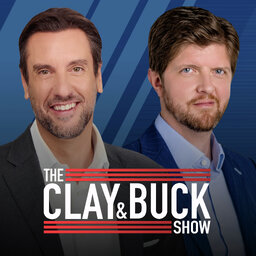
The Clay Travis and Buck Sexton Show
The Clay Travis and Buck Sexton Show. Clay Travis and Buck Sexton tackle the biggest stories in news…Social links
Follow podcast
Recent clips

Daily Review with Clay and Buck - Aug 3 2026
1:04:14

Hour 1 - Clay's Double WNBA Challenge
36:48

Hour 2 - Illustrating Absurdity
36:47