 The Clay Travis and Buck Sexton Show
In Hour 2 of The Clay Travis and Buck Sexton Show, Clay Travis and Buck Sexton devote extensive breaking-news coverage to the reported attempted hijacking and terrorist attack aboard a Dubai-to-Israel flight, focusing on reports that a co-pilot stabbed the captain and attempted to take control of an aircraft carrying roughly 180 passengers. The hosts discuss the plane’s dramatic loss of approximately 14,000 feet, the struggle inside the cockpit, and the actions that reportedly prevented the incident from becoming a mass-casualty disaster. They react to Israeli Prime Minister Benjamin Netanyahu’s characterization of the incident as a jihadist terror attack and consider whether the timing, destination, proximity to Israeli airspace, and approaching anniversary of 9/11 could point to a deliberately planned attack. Clay and Buck also explore questions surrounding aviation security, pilot screening, cockpit access, terrorism, lone-wolf radicalization, sleeper cells, Al-Qaeda, ISIS, and airline operations into Israel, while emphasizing that information about the motive and circumstances was continuing to develop during the live broadcast.
The breaking aviation story leads to a broader discussion in Hour 2 about the history of pilot suicide, intentional airplane crashes, airline security vulnerabilities, and post-9/11 aviation safety. Clay references the disappearance of Malaysia Airlines Flight 370 and previous incidents in which pilots were suspected or determined to have intentionally crashed aircraft. Buck recalls another deadly aviation case involving a suicidal pilot locking a colleague outside the cockpit. The hosts contrast those incidents with the reported attack on the Israel-bound flight and debate whether the aircraft’s sudden plunge could have been part of an attempt to crash it. They also raise the possibility that, had the alleged attacker retained control long enough to reach Israel, the aircraft itself could have been used as a weapon against people on the ground. Clay and Buck repeatedly compare the near-disaster with the lessons of September 11 and Flight 93, arguing that vigilance and immediate intervention by passengers and crew can remain critical when conventional security systems fail.
Clay and Buck focus particularly on the wounded pilot who reportedly helped stop the alleged attacker, describing the intense physical struggle that could have unfolded inside the confined cockpit and praising the pilot, crew members, and others who intervened. A caller named Tim, a former airline pilot who flew Boeing 757 and 767 aircraft, joins the program to explain cockpit-door procedures and how cabin crew can request emergency access. He also recounts the 1994 FedEx Flight 705 attack, in which flight crew members fought an attacker inside the cockpit while the airplane was maneuvered aggressively in an effort to incapacitate him. The caller discusses post-9/11 cockpit self-defense training and the presence of emergency equipment such as a crash axe in the cockpit, providing Clay and Buck with additional context for how an extraordinary confrontation aboard an aircraft might unfold. The hosts underscore how narrowly catastrophe may have been avoided and return to the story of Flight 93 and Todd Beamer as examples of people taking action during an aviation emergency.
A major theme throughout Hour 2 of The Clay Travis and Buck Sexton Show is the hosts’ criticism of CNN, MSNBC and The New York Times over their initial treatment of the Israel-bound flight story. Clay contrasts the description of the incident as an “altercation” between pilots with reports that one pilot stabbed another, while Buck argues that ideological considerations influence how major media organizations cover terrorism involving Israel and Islamist extremism. They discuss the larger debate surrounding Israel, Gaza, jihadist terrorism, anti-Israel sentiment, social media, TikTok, and younger Americans’ views of the Israel-Gaza conflict. Clay warns listeners about what he views as misleading anti-Israel content circulating through social media feeds, while Buck rejects accusations of genocide against Israel and argues that incendiary rhetoric can have real-world consequences. The hosts also recall the political controversy surrounding the media and Obama administration’s handling of the 2012 Benghazi terrorist attack and question whether reluctance to describe terrorism explicitly could again influence American political perceptions shortly before an election.
The hosts briefly carry remarks from President Donald Trump at the White House, where the President announces that the last American forces are leaving Iraq. Trump characterizes America’s lengthy involvement in Iraq as a quagmire and praises Iraq’s new prime minister. Later in Hour 2, Clay asks Buck, who previously served in Iraq, for his assessment of what the U.S. troop withdrawal means for American veterans, Iraqi stability, and the future of the Middle East. Buck discusses Iranian influence inside Iraq, Shiite militias, Sunni-Shia tensions, Kataib Hezbollah, ISIS, Iraqi oil revenues, and the challenge of sustaining Iraqi democracy without an American military presence. He argues that the withdrawal marks a consequential test for Iraq, warning that Iranian-backed militias could destabilize the country while acknowledging that indefinite American deployments also carry substantial costs. The conversation examines whether the United States could eventually be pulled back into Iraq if sectarian warfare or terrorist organizations once again create a serious security crisis.
Hour 2 closes with a discussion of diesel fuel prices, global energy markets, oil refining, Russia, Ukraine, and Iran. A caller from Baton Rouge challenges Clay’s contention that the Russia-Ukraine war is contributing to elevated diesel prices, arguing that the geographic origin of crude oil is less important than how petroleum is refined. Clay responds by citing an AI-generated explanation pointing to refinery damage, Russian export restrictions, scarce spare refining capacity, and broader disruptions to internationally traded diesel supplies. Buck tries to reconcile the two arguments, agreeing that petroleum products ultimately trade through a global market while maintaining that disruptions affecting Russian and Iranian supply and refining capacity can still contribute to diesel price pressures. The exchange connects the ongoing wars in Russia-Ukraine and the Middle East with fuel supplies, refining capacity, energy markets, and consumer prices.
Overall, Hour 2 of The Clay Travis and Buck Sexton Show is dominated by the breaking Dubai-to-Israel attempted hijacking and suspected terrorist attack, with detailed discussion of the cockpit struggle, the plane’s dramatic descent, the reported heroism of the wounded pilot and crew, airline security, 9/11, Flight 93, terrorism, Israel and Gaza, radicalization, and media coverage. The second hour also expands into President Donald Trump’s announcement of the final U.S. troop withdrawal from Iraq, Iranian influence in Iraq, ISIS, Shiite militias, Middle East security, the Russia-Ukraine war, diesel prices, oil refining, and global energy markets, making Hour 2 a wide-ranging examination of breaking news, terrorism, national security, foreign policy, media bias, aviation safety, Iraq, Iran, Russia, Ukraine, and energy prices.
Make sure you never miss a second of the show by subscribing to the Clay Travis & Buck Sexton show podcast wherever you get your podcasts! ihr.fm/3InlkL8
For the latest updates from Clay & Buck, visit our website https://www.clayandbuck.com/
Connect with Clay Travis and Buck Sexton:
FB - https://www.facebook.com/ClayandBuck/
IG - https://www.instagram.com/clayandbuck/
YouTube - https://www.youtube.com/c/clayandbuck
Rumble - https://rumble.com/c/ClayandBuck
TikTok - https://www.tiktok.com/@clayandbuck
In 1 playlist(s)
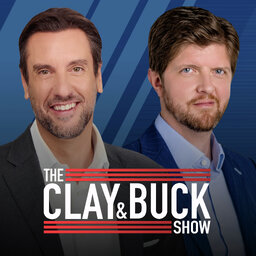
The Clay Travis and Buck Sexton Show
The Clay Travis and Buck Sexton Show. Clay Travis and Buck Sexton tackle the biggest stories in news…Social links
Follow podcast
Recent clips

Daily Review with Clay and Buck - Sep 30 2026
57:38

Hour 1 - Israel's "Let's Roll" Moment
36:42

Hour 3 - Have Terror Cells Been Mobilized?
36:11