 The Clay Travis and Buck Sexton Show
In Hour 1 of the Clay Travis and Buck Sexton Show, Clay Travis and Buck Sexton open the program with a major focus on President Donald Trump’s ongoing state visit to China, the surging U.S. economy, global energy markets, and the political implications of rising gas prices heading into the 2026 midterm elections. This first hour sets the stage by combining breaking international developments with domestic economic and political analysis.
The hosts begin by emphasizing the strength of the U.S. economy and stock market, pointing out that markets have reached record highs during Trump’s China trip, with a dramatic rally over the past year delivering substantial gains for investors. They highlight how this surge has boosted retirement accounts, 401(k)s, and overall wealth, framing it as a significant economic achievement. However, they also note a disconnect between macroeconomic success and everyday voter perception, stressing that many Americans remain focused on persistent concerns about the cost of living—particularly gas prices and inflation.
From there, the conversation shifts to the Trump–Xi Jinping summit, which both hosts describe as positive in tone during its early stages. Initial discussions reportedly included efforts to expand economic cooperation, increase U.S. exports to China, address the flow of fentanyl-related materials, and maintain stability in global energy markets. While acknowledging the upbeat messaging from both sides, Buck cautions that these early diplomatic signals are largely symbolic and that real outcomes will depend on whether agreements are implemented and enforced over time.
A central issue throughout Hour 1 is the situation involving Iran and the Strait of Hormuz, one of the most critical chokepoints for global oil shipments. The hosts discuss how China’s influence over Iran could play a key role in keeping the strait open, noting that early indications suggest some continued oil flow is occurring. This ties directly into concerns about oil prices, which have risen significantly, and the downstream impact on gasoline costs for American consumers. Clay emphasizes that this is the issue most likely to influence public opinion, arguing that gas prices remain one of the most politically sensitive economic indicators in the country.
The discussion also highlights the broader geopolitical stakes of U.S.–China relations, particularly when it comes to energy, trade, and strategic competition. While both countries appear to agree in principle on issues like preventing Iran from obtaining nuclear weapons, Buck points out that such agreements often lack concrete enforcement mechanisms. He underscores that major points of tension—especially over Taiwan—remain unresolved.
Taiwan emerges as another critical topic, with the hosts explaining its importance to the global economy due to its dominance in semiconductor chip production, which underpins industries from artificial intelligence to consumer electronics. They stress that any disruption to Taiwan’s chip manufacturing—particularly from potential Chinese military action—would have severe consequences for the global economy, potentially triggering a major market collapse and widespread economic instability. This segment reinforces the idea that Taiwan is not just a regional concern but a cornerstone of modern technological infrastructure.
As the hour continues, Clay and Buck turn to U.S. domestic politics and the 2026 midterms, asking what message Democrats can effectively campaign on if economic indicators such as the stock market and employment remain strong and gas prices stabilize. Clay suggests that Democrats may default to broad narratives focused on opposition to Trump or protecting democratic institutions, while Buck argues that even modest economic dissatisfaction—especially tied to energy costs—can be enough to sway undecided voters.
The hosts repeatedly emphasize the importance of swing voters and independents, noting that elections are not decided by loyal supporters but by those who can be persuaded. They highlight how gasoline prices serve as a highly visible and emotional economic indicator, influencing voter sentiment more directly than stock market gains. This leads to a broader discussion of political messaging, with Buck warning that Democrats could still gain traction by simplifying their message around frustration with costs, regardless of broader economic performance.
The hour concludes with a listener call that provides a grassroots perspective, as a caller defends Trump’s handling of the economy and notes stable or improving prices in her personal experience. In response, the hosts acknowledge strong support among core voters while reiterating that national elections hinge on broader sentiment among persuadable voters, particularly in competitive states.
Make sure you never miss a second of the show by subscribing to the Clay Travis & Buck Sexton show podcast wherever you get your podcasts! ihr.fm/3InlkL8
For the latest updates from Clay & Buck, visit our website https://www.clayandbuck.com/
Connect with Clay Travis and Buck Sexton:
FB - https://www.facebook.com/ClayandBuck/
IG - https://www.instagram.com/clayandbuck/
YouTube - https://www.youtube.com/c/clayandbuck
Rumble - https://rumble.com/c/ClayandBuck
TikTok - https://www.tiktok.com/@clayandbuck
In 1 playlist(s)
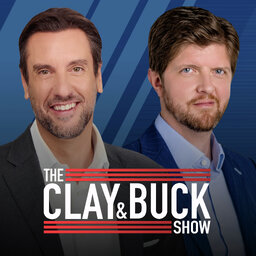
The Clay Travis and Buck Sexton Show
The Clay Travis and Buck Sexton Show. Clay Travis and Buck Sexton tackle the biggest stories in news…Social links
Follow podcast
Recent clips

Daily Review with Clay and Buck - Sep 16 2026
1:03:16

Hour 1 - Goo Goo Dolls vs. Macklemore
36:44

Hour 2 - Confronting America: What Has to Change
36:49