 The Clay Travis and Buck Sexton Show
A major segment focused on the late Dolly Parton and the reasons behind her extraordinary popularity across political and cultural divides. The hosts played and analyzed a resurfaced 2018 interview in which Parton declined repeated attempts by an ABC journalist to draw her into criticism of President Donald Trump. Clay and Buck argued that Parton’s refusal to engage in partisan politics exemplified a bygone era when entertainers prioritized broad audience appeal over political activism. They contrasted Parton’s approach with the current culture of celebrity political engagement and debated whether modern entertainers have damaged their reputations by taking public ideological positions.
The conversation expanded into a larger examination of celebrity culture, social media, and political polarization. Clay reflected on themes from his book Republicans Buy Sneakers Too, referencing Michael Jordan’s famous approach of avoiding partisan politics and discussing how athletes and entertainers traditionally maintained broad public appeal. The hosts pointed to Colin Kaepernick’s national anthem protests as a turning point in the intersection of sports and political activism, arguing that the modern sports landscape became increasingly politicized after 2016. They debated whether today’s celebrities are sacrificing universal popularity by taking strong political stances and whether society has become too divided for any public figure to enjoy broad national approval.
A major portion centered on the ongoing Lindsey Clancy trial as the case moved toward jury deliberations. Clay, Buck, and Keenan examined public reactions to the case, particularly the social media movement expressing sympathy and support for Clancy despite the deaths of her children. The conversation explored debates over postpartum depression, mental illness defenses, criminal responsibility, and whether society applies different standards to mothers and fathers accused of violent crimes. The hosts questioned why some advocacy groups and online communities appeared focused on Clancy’s struggles rather than the children who were killed, leading to a broader discussion about accountability, victimhood culture, and public empathy.
The discussion expanded into a cultural analysis of modern feminism and motherhood. Keenan argued that many women have been taught to view themselves as victims despite significant educational, professional, and social gains over recent decades. The segment examined claims that contemporary feminist messaging often portrays marriage, family responsibilities, and motherhood as forms of oppression while promoting personal liberation as the ultimate goal. Clay and Buck tied these ideas to larger questions about family structure, parental obligations, and shifting cultural attitudes toward marriage, child-rearing, and gender roles in America.
Another major theme involved the influence of social media on public opinion and behavior. Keenan argued that social media platforms amplify ideological trends, foster groupthink, and accelerate the spread of cultural movements ranging from gender identity discussions to online communities supporting controversial criminal defendants. The conversation linked social media dynamics to broader trends in modern American culture, including online activism, viral movements, and the rapid circulation of narratives that gain traction through digital communities.
The interview also touched on crime and public safety in California. Keenan shared a personal story about having her SUV stolen twice within two days from her neighborhood in the Pasadena area. She described how vehicle tracking technology helped recover the car both times and used the experience to illustrate concerns about crime, law enforcement, and quality-of-life issues in California. The hosts used the story as an example of growing frustrations among residents dealing with theft and public safety concerns.
Clay and Buck shifted to immigration and national security. Buck highlighted new immigration enforcement data showing a significant increase in ICE arrests under the Trump administration, discussing rising arrest totals and renewed efforts to remove individuals residing in the country illegally. The hosts argued that the administration was following through on campaign promises related to border security, immigration enforcement, and deportation policy. Immigration, ICE operations, border security, and illegal immigration enforcement became key topics during this segment.
The show also covered actions by Secretary of State Marco Rubio targeting far-left extremist networks. Buck discussed newly announced sanctions directed at organizations allegedly connected to Antifa-related activities and transnational far-left activism. The hosts framed these moves as part of a broader effort by the Trump administration to combat political violence, domestic extremism, and threats to public safety.
Clay and Buck debated the future of the Democratic Party and the emerging field of potential 2028 presidential candidates. They discussed California Governor Gavin Newsom’s political prospects, including media reports about a large wine cellar at his home and the broader challenge of presenting himself as a populist candidate despite his wealthy background. Clay argued that Newsom’s political profile has weaknesses, while Buck maintained that the California governor remains one of the most likely Democratic nominees.
The hosts also analyzed potential Democratic contenders including Kamala Harris, Alexandria Ocasio-Cortez (AOC), Josh Shapiro, Jon Ossoff, Andy Beshear, Mark Kelly, and Raphael Warnock. They debated whether the Democratic Party would move toward a more progressive candidate such as AOC or continue searching for a more traditional establishment figure. On the Republican side, they discussed Vice President JD Vance and Secretary of State Marco Rubio as potential future leaders, while emphasizing that presidential politics remains highly fluid years before the next election cycle.
C&B centered on the escalating controversy surrounding former NBA players Enes Kanter Freedom and Royce White declaring for the WNBA draft. Clay unveiled what he described as a significant legal complication for the WNBA, arguing that the league may face challenges defending its eligibility standards after previously embracing a player who publicly identified as transgender and underwent gender-related medical procedures while continuing to compete in the league. The hosts explored the intersection of gender identity policies, women’s sports, Title IX debates, biological sex definitions, transgender athlete participation, and potential litigation. Clay argued that the WNBA may eventually be forced to define what constitutes eligibility for women’s competition, while Buck questioned whether courts would ultimately intervene in league personnel decisions. The discussion touched on broader national debates involving fairness in women’s sports, gender ideology, athletic competition, and legal challenges facing professional sports organizations.
The hosts spent considerable time exploring the legal ramifications of potential lawsuits involving the WNBA and draft eligibility. They examined questions of standing, discrimination claims, discovery procedures, venue selection, and how courts might handle a case involving biological sex distinctions in professional athletics. The conversation continued a larger national discussion surrounding transgender participation in sports and the legal conflicts emerging between traditional sex-based categories and modern gender identity policies.
Make sure you never miss a second of the show by subscribing to the Clay Travis & Buck Sexton show podcast wherever you get your podcasts! ihr.fm/3InlkL8
For the latest updates from Clay & Buck, visit our website https://www.clayandbuck.com/
Connect with Clay Travis and Buck Sexton:
FB - https://www.facebook.com/ClayandBuck/
IG - https://www.instagram.com/clayandbuck/
YouTube - https://www.youtube.com/c/clayandbuck
Rumble - https://rumble.com/c/ClayandBuck
TikTok - https://www.tiktok.com/@clayandbuck
In 1 playlist(s)
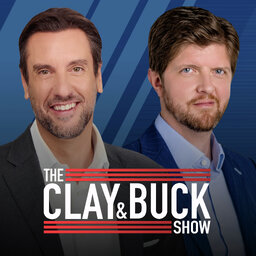
The Clay Travis and Buck Sexton Show
The Clay Travis and Buck Sexton Show. Clay Travis and Buck Sexton tackle the biggest stories in news…Social links
Follow podcast
Recent clips

Daily Review with Clay and Buck - Oct 2 2026
55:28

Hour 1 - The Process is the Punishment
36:41

Hour 2 - Change Our Mind
36:43