 Trumponomics
Trumponomics
Playlist by TrumponomicsTariffs, crypto, deregulation, tax cuts, protectionism, are just some of the things back on the table when Donald Trump returns to the Presidency. To help you plan for Trump's singular approach to eco…Follow the podcast:
509 clip(s) in playlist

Is Trump About to Lose America’s Farmers?
Donald Trump’s wars, both the global trade version and the real one on Iran, are increasing costs for America’s farmers -- traditional followers of the Republican president who just might be reconsidering their allegiance. Stephanie Flanders speaks with Bloomberg’s Steven Dennis and former US Depar…
28:41Clean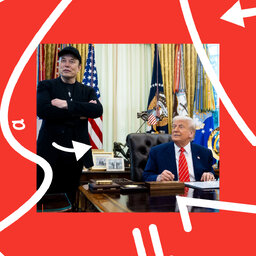
Why Governments Can’t Unplug From Elon Musk
Elon Musk may be an extreme figure, but the authors of Muskism: A Guide for the Perplexed argue he represents a much bigger dynamic that's quickly taking shape, one where promises of “sovereignty through technology” may permanently embed tech figures such as himself at the center of government and …
32:26Clean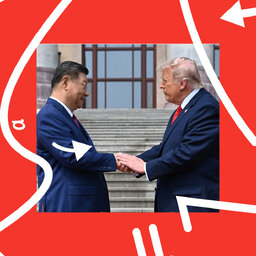
The Tough AI Questions Looming Over the Xi-Trump Summit
As Chinese President Xi Jinping meets with US President Donald Trump in Washington, this week's episode of Trumponomics asks whether the world’s leading AI powers can move beyond summit pageantry and start managing the dangers created by their technological rivalry. Host Stephanie Flanders speaks w…
27:47Clean
Why 5% Treasury Yields May Be Just the Beginning
The US 10-year Treasury yield has breached 5%, but the forces pushing borrowing costs higher may run much deeper than the latest economic shocks. Stephanie Flanders is joined by Bloomberg Opinion columnist John Authers and Jamie Rush of Bloomberg Economics to discuss how demographics, rising govern…
25:52Clean
Cory Doctorow Says Be Skeptical of the AI Sales Pitch
Artificial intelligence companies are spending extraordinary sums on the promise that their technology will transform the global economy. Author and technology critic Cory Doctorow joins Trumponomics host Stephanie Flanders to challenge that sales pitch, arguing that AI may be useful without delive…
35:58Clean
"The Economics Show": Breaking China’s rare earths chokehold
In the US-China trade conflict, rare earth metals are Beijing's ultimate trump card. Last year, China ramped up restrictions on these key industrial elements, spooking industry, and forcing the US to climb down. Since that wake-up call, the US has worked hard to reduce its dependence on China. It h…
31:53Clean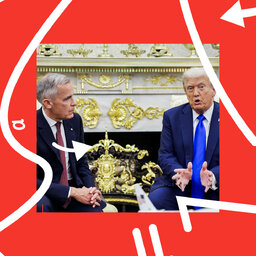
As Canada Turns From the US, Is China the Alternative?
With tensions rising between Canada and the US over the latest broadsides in President Donald Trump's trade war, the White House is threatening even more levies following Prime Minister Mark Carney's announced dollar-for-dollar retaliation. The rupture between Ottawa and Washington is becoming hard…
30:05Clean
Why Inflation Could Be Good News for Japan
Can inflation in Japan be a sign of a healthier economy? On this week's episode of Trumponomics, Stephanie Flanders is joined by Taro Kimura, an economist with Bloomberg Economics, and Bloomberg News Senior Editor Chris Anstey to explore the potential cost and benefits of a weakening yen. Together,…
27:55
Introducing: Our Town
Our Town from Bloomberg’s Big Take podcast follows residents of Gainesboro, Tennessee, after a group of far-right Christians moves in with plans for a radical social experiment. Listen to episode 1 here.
01:52
What Is Fed Chair Kevin Warsh Trying to Say?
Kevin Warsh has spent his first three months as chair of the Federal Reserve pretty tight-lipped about his views on the economy, a stark contrast to how central bank policymakers have traditionally communicated with market participants. On this episode, host Stephanie Flanders speaks with Bloomberg…
28:42