 The Science of Skin
What do tattoos, trafficking survivors, and longevity medicine have in common? More than you'd think. In this episode of Science is Skin, board-certified dermatologist Dr. Ted Lain sits down with Dr. Shadi Kourosh — Harvard Medical School professor, public health physician, and director of dermatology at Nantucket Cottage Hospital — for a conversation that spans medicine, advocacy, and cutting-edge science.
Dr. Kourosh shares how her work with underserved communities at Massachusetts General Hospital led her to the frontlines of the fight against human trafficking. She breaks down the "Three I's" — infections, injuries, and imagery — the clinical signs dermatologists and healthcare providers should recognize when a patient may be a trafficking victim. She also discusses trauma-informed care, how to create a safe environment for disclosure, and the STEER app (Skin Signs of Trafficking Education Advocacy and Resources), a free tool designed to connect providers and survivors with local resources.
In the second half, Dr. Kourosh pivots to longevity medicine — one of dermatology's fastest-growing frontiers — and explains why separating skin science from snake oil has never been more important for patient protection and consumer health.
In this episode:
- How dermatologists can identify skin signs of human trafficking
- The Three I's framework: infections, injuries, and imagery in trafficking tattoos
- Trauma-informed care and the "warm handoff" approach for at-risk patients
- The STEER app and AAD Human Trafficking Toolkit — free resources for providers
- Laser tattoo removal as a pathway to safety and reintegration for survivors
- The new science of skin longevity and preventive dermatology
- Fact vs. fiction in the longevity medicine space
Resources mentioned:
- STEER App (Skin Signs of Trafficking, Education, Advocacy & Resources)
- AAD Human Trafficking Toolkit: aad.org
- American Society for Laser Medicine and Surgery (ASLMS)
- Polaris Project National Human Trafficking Hotline
To watch this and other episodes, be sure to check out our YouTube page
DISCLAIMER: This podcast is not intended to provide diagnosis, treatment, or medical advice. Content provided in this podcast is for educational purposes only. Please consult with a physician regarding any health-related diagnosis or treatment.
In 1 playlist(s)
The Science of Skin
The Science of Skin is a podcast for those who want to be in-the-know about what’s trending, and wha…Social links
Follow podcast
Recent clips
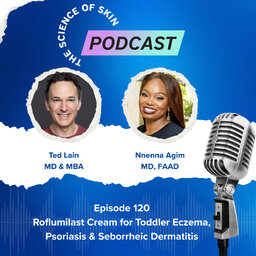
Roflumilast Cream for Toddler Eczema, Psoriasis & Seborrheic Dermatitis
21:56
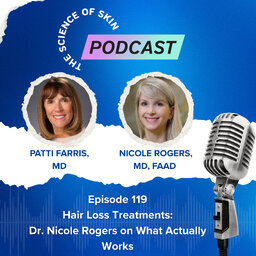
Hair Loss Treatments: Dr. Nicole Rogers on What Actually Works
32:57
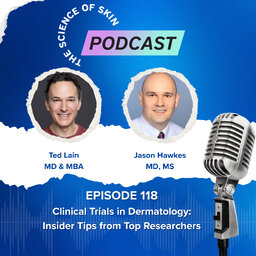
Clinical Trials in Dermatology: Insider Tips from Top Researchers
28:32