 Butterfly: Let's Talk
Evidence-based treatment for eating disorders rightly focuses on restoring health and changing eating disorder behaviours. But what if those behaviours are also protecting something much deeper?
What if lasting recovery starts not with asking "What's wrong with me?" but "What happened to me?"
In this episode of Let's Talk, Beth talks with clinical psychologist and schema therapy expert Dr Susan Simpson about her new book Breaking Negative Eating Patterns and Remembering Your True Self, which offers a compassionate new way of understanding eating disorders. Drawing on more than 25 years of clinical experience, Susan explains how eating disorders can develop as intelligent coping strategies that protect us from shame, loneliness, unmet emotional needs and painful life experiences.
Susan explores the core ideas behind schema therapy, including our different "parts", the role of the inner critic, and how reconnecting with our authentic self can reduce the need for eating disorder behaviours. She also walks through the four-stage recovery journey outlined in her book, shares practical exercises listeners can try, and explains how clinicians and people with lived experience can use the book alongside evidence-based treatment.
It's a hopeful conversation about understanding the story behind your struggles, reconnecting with yourself, and discovering that recovery is about far more than changing eating behaviours.
Resources
- Breaking Negative Eating Patterns and Remembering Your True Self
- Susan Simpson LinkedIn
- Book: Schema therapy for eating disorders
- Schema therapy training online
Follow Butterfly Foundation on Instagram here
Production Team:
- Produced by Beth Shelton and Sam Blacker from The Podcast Butler
- Executive Producer: Camilla Becket
- Supported by the Waratah Education Foundation
For more information about this episode, visit www.butterfly.org.au/podcast and click through to this episode.
If you're concerned about an eating disorder for yourself or someone you care about, please reach out to the Butterfly National Helpline or chat online with one of their specialist counsellors. Recovery is possible with the right support.
In 1 playlist(s)
Butterfly: Let's Talk
This is Let's Talk Body Image and Eating Disorders from the Butterfly Foundation, your national voic…Social links
Follow podcast
Recent clips

The Wellness Trap: How 'healthy' content harms users at risk for eating disorders
29:42
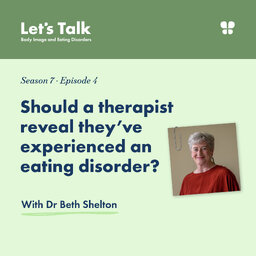
Should a therapist reveal they’ve experienced an eating disorder?
40:32
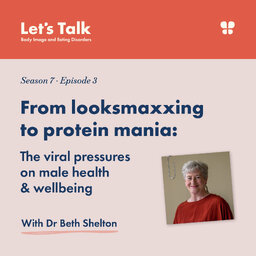
From looksmaxxing to protein mania: the viral pressures on male health & wellbeing
39:26