 90 Miles from Needles: the Desert Protection Podcast
90 Miles from Needles: the Desert Protection Podcast
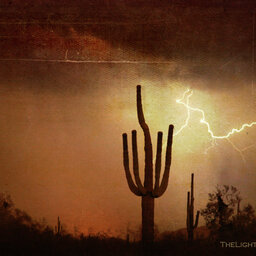
Join Chris Clarke and a variety of guests as they explore the challenges and opportunities of the American Southwest's fragile ecosystems. Engaging in…Episode thumbnail photo by Bo Insogna.
The deadly August 29 flood in Grand Canyon National Park received national attention, but it was not an isolated event. Flooding struck communities, parks and backcountry destinations across Utah, Arizona and New Mexico throughout the summer.
Chris Clarke presents four things we should understand about desert flash floods: they are regional rather than isolated disasters; they are fundamental forces that build desert landscapes; blaming victims can undermine safety; and better preparation, warnings, closures and land-use decisions can reduce the danger. The episode also explains why violent monsoon floods do little to relieve the Colorado River drought.
Key takeaways
- The Grand Canyon flood was part of a much wider period of destructive Southwest monsoon flooding.
- Flash floods are not aberrations in deserts. They carve canyons, move boulders, reroute washes and build alluvial fans.
- Experience and preparation reduce risk, but they cannot eliminate it.
- Blaming victims encourages people to treat safety warnings as advice intended for someone less competent.
- Closures, permits, upstream monitoring, better flood maps and responsible land-use decisions can save lives.
- Intense local flooding does not necessarily produce enough water to replenish major reservoirs or end a regional drought.
Notable quote
“The sustained river incision and the geological uplift are the canvas. The flash floods are the brushstrokes.”
- Griffiths, Peter G., Robert H. Webb, and Theodore S. Melis. 2004. “Frequency and Initiation of Debris Flows in Grand Canyon, Arizona.” Journal of Geophysical Research: Earth Surface 109(F4).
DOI: 10.1029/2003JF000077 - Melis, Theodore S., Robert H. Webb, Peter G. Griffiths, and T.J. Wise. 1994. Magnitude and Frequency Data for Historic Debris Flows in Grand Canyon National Park and Vicinity, Arizona. USGS Water-Resources Investigations Report 94-4214.
DOI: 10.3133/wri944214 - Cannon, Susan H., et al. 2008. “Storm Rainfall Conditions for Floods and Debris Flows from Recently Burned Areas in Southwestern Colorado and Southern California.” Geomorphology 96(3–4): 250–269.
DOI: 10.1016/j.geomorph.2007.03.019 - Goodrich, David C., et al. 2018. “Southwestern Intermittent and Ephemeral Stream Connectivity.” Journal of the American Water Resources Association 54(2): 400–422.
DOI: 10.1111/1752-1688.12636 - Swain, Daniel L., et al. 2020. “Increased Flood Exposure Due to Climate Change and Population Growth in the United States.” Earth’s Future 8.
DOI: 10.1029/2020EF001778
In 1 playlist(s)
90 Miles from Needles: the Desert Protection Podcast
90 Miles from Needles is a podcast about the environment, landscapes, and people of the American des…Social links
Follow podcast
Recent clips
S5E28: 4 Things You Need to Know about Desert Flooding [Subscribers' Cut]
30:36

S5E27: Sonoran Toads and the Dirty Business of Ego Death
1:01:18

S5E27: Sonoran Toads and the Dirty Business of Ego Death [subscribers cut]
1:00:43